
Significant collaboration between the Centre for the New Midlands, Social Life and Witton Lodge Community Association sets out a practical framework for safer, fairer and more connected neighbourhoods.
A major new report published today by the Centre for the New Midlands (CNM), Social Life and Witton Lodge Community Association (WLCA) sets out the next phase in the development of a pioneering Decent Neighbourhood Standard — a new framework designed to define, measure and improve the quality of neighbourhood life across the UK.
The report argues that while the UK has long had a Decent Homes Standard, there is no equivalent standard for the wider neighbourhood – despite the critical role neighbourhoods play in shaping health, opportunity, wellbeing and community life. The Decent Neighbourhood Standard can become a vital tool for implementing government policy on neighbourhoods, including the Pride in Place programme, reforms to the Decent Homes Standard, Birmingham’s Liveable Neighbourhoods agenda and growing interest in neighbourhood-level governance and community-led regeneration.
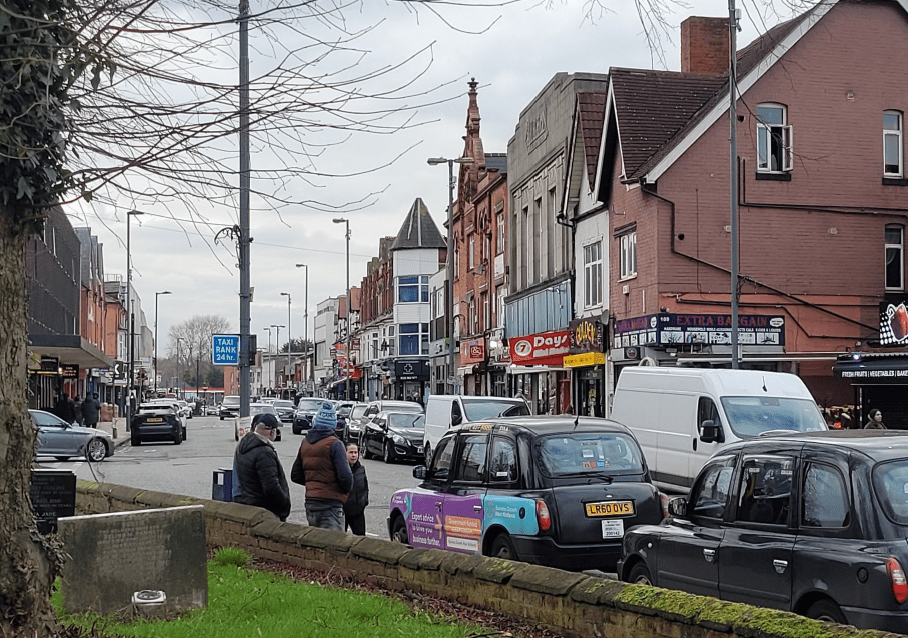
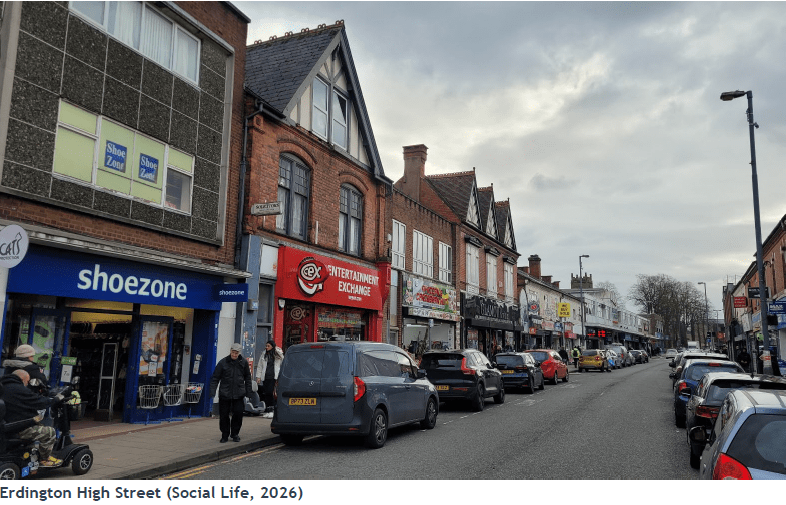
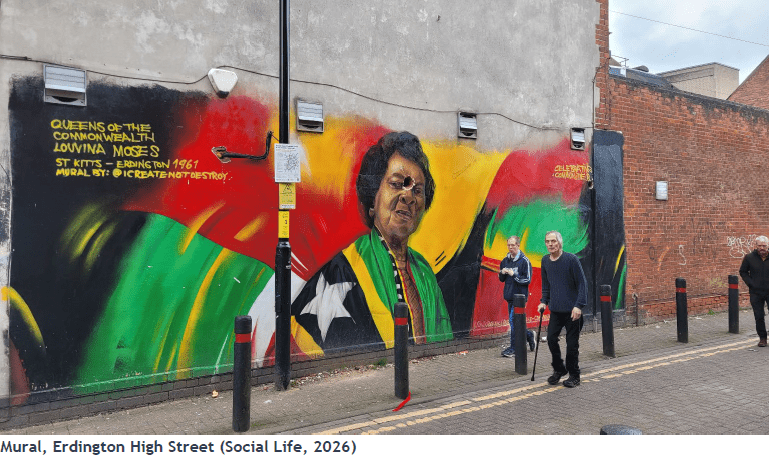
The report, ‘North Birmingham Decent Neighbourhood Standard: Erdington High Street’, focuses on Erdington in North Birmingham. It develops a neighbourhood dashboard focused on safety and crime, sense of belonging, and opportunity and local economy. It combines community insight, survey responses, local stakeholder engagement and comparative data analysis to establish an evidence-based framework for understanding what makes a “decent” neighbourhood.
The research identifies both the strengths and challenges facing Erdington High Street. Residents and organisations highlighted strong community spirit, diversity and transport connectivity, but also raised deep concerns around anti-social behaviour, crime, environmental decline, poor-quality retail provision and the long-term impact of deprivation.
Dr Halima Sacranie, Director of Housing Research at the Centre for the New Midlands, described the report as an important step in moving the Decent Neighbourhood Standard from theory into practical delivery:
“The quality of homes should not be considered in isolation from the quality of the neighbourhoods within a policy landscape, as both are inextricably linked and impact profoundly on the lives of residents and communities. This report takes the Decent Neighbourhood Standard from a universal concept encompassing 4 critical dimensions to practical application, demonstrating how we can begin to measure neighbourhood quality in ways that are evidence-based and grounded in lived experience, accountability and local realities.
The Erdington DNS demonstrator shows both the challenges and possibilities facing many communities across the country. Residents and communities want to feel safer in improved places and spaces and crucially to have influence over the future of their neighbourhoods. The Decent Neighbourhood Standard is about creating a shared and collaborative framework that can help communities, policymakers and institutions work together to deliver that.”
Reflecting on the importance of understanding neighbourhoods through lived experience as well as data, Nicola Bacon, Founding Director of Social Life, added:
“Neighbourhoods are not simply collections of buildings and services — they are shaped by relationships, trust, opportunity and everyday experience. To improve our quality of life we need to understand how people experience daily life in their home neighbourhood. The Decent Neighbourhood Standard offers a way to connect policy and investment decisions more closely to the realities of everyday life. It offers a way forward for all neighbourhood to improve their basic standards, not just those that are receiving regeneration targeted funding”.
For Witton Lodge Community Association, the report reflects years of community-led work in North Birmingham and a long-term commitment to neighbourhood renewal. Afzal Hussain DL, Chief Officer of WLCA, said the findings reinforce the importance of placing residents at the centre of local change:
“Witton Lodge Community Association has long believed that communities themselves must be at the heart of shaping the future of their neighbourhoods. This report reflects the voices, concerns and aspirations of local residents and organisations who care deeply about Erdington and North Birmingham. The Decent Neighbourhood Standard is not simply about identifying problems — it is about building a practical framework for action, accountability and long-term stewardship. We want this work to support stronger partnerships, empower local communities and help create neighbourhoods where people feel safe, connected and proud of where they live.”
The report also highlights the importance of community anchor organisations in delivering long-term neighbourhood change and calls for stronger local accountability, sustained investment and resident-led approaches to regeneration. The Decent Neighbourhood Standard programme will continue to evolve through further phases of research focused on reducing inequalities, strengthening local accountability and stewardship, and securing sustainable futures for neighbourhoods.
Notes to editors
- The report was produced collaboratively by the Centre for the New Midlands, Social Life and Witton Lodge Community Association.
- The Decent Neighbourhood Standard is a developing framework designed to establish practical standards for neighbourhood quality, accountability and wellbeing.
- The Erdington demonstrator project builds on earlier Decent Neighbourhood Standard pilot work undertaken in Perry Common and North Birmingham during 2025.
- The report combines secondary data analysis, resident and stakeholder surveys, Community Dynamics methodology and policy analysis to establish a baseline understanding of neighbourhood quality in Erdington.
- Key themes explored in the report include safety and crime, social connection and belonging, economic opportunity, public infrastructure and local governance.
For further information on the report, please do not hesitate to contact the team by emailing research@thenewmidlands.org.uk
The full report can be viewed below, or is available to download by clicking here
The summary of the report can be viewed below, or is available to download by clicking here