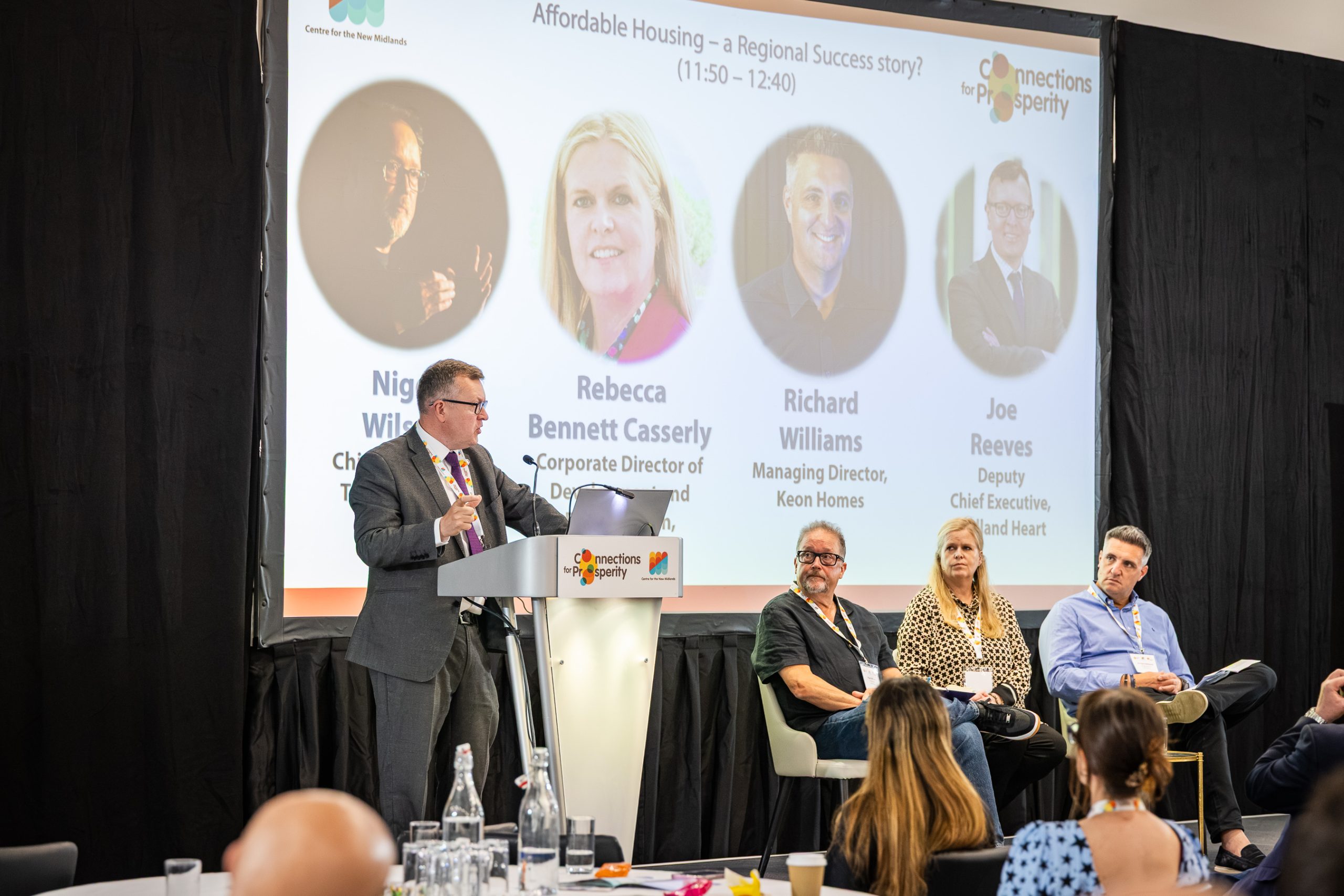
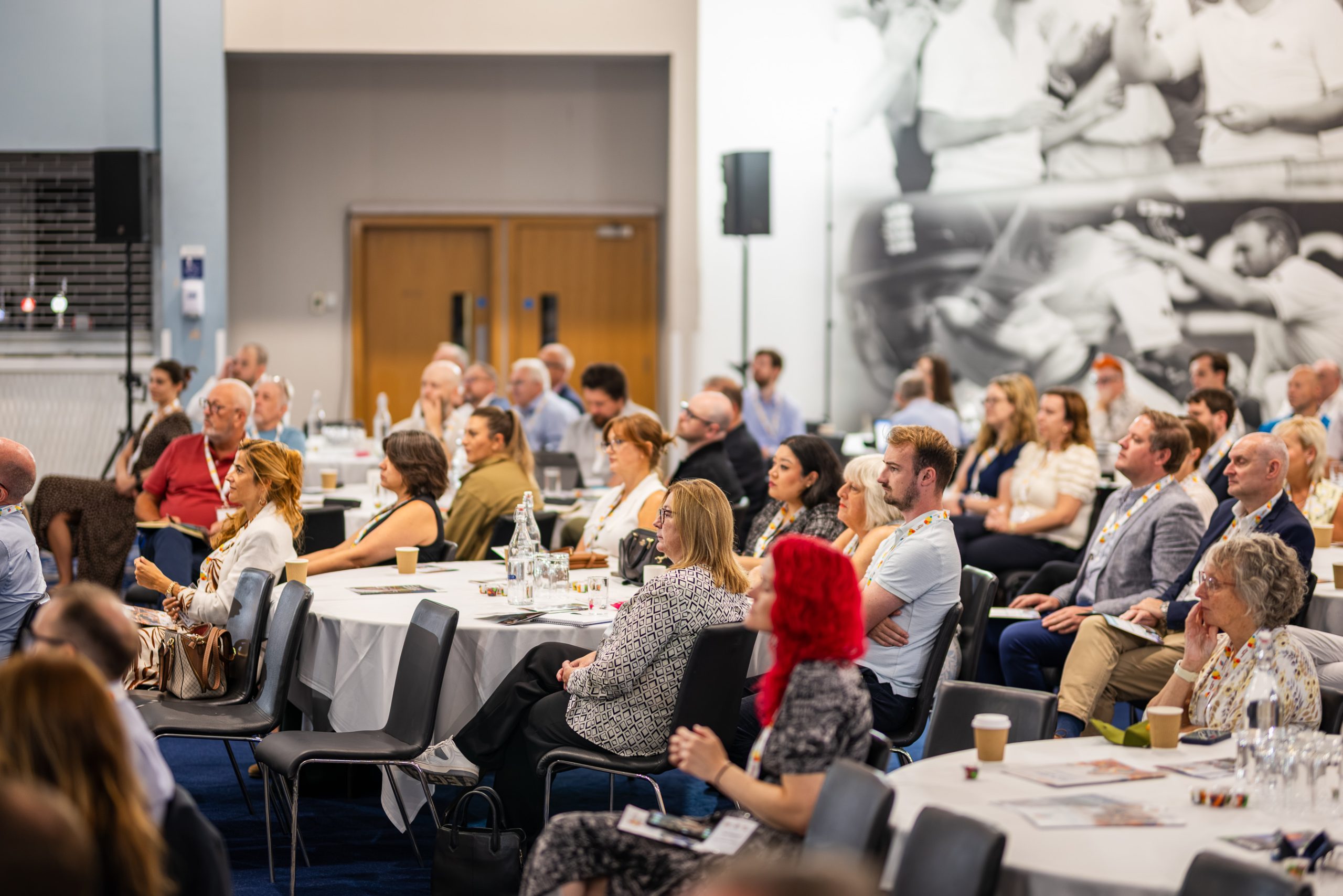
The panel session Affordable Housing – A Regional Success Story? brought together senior leaders from across the housing sector to examine whether the Midlands can genuinely claim to be leading the way in delivering affordable homes—and what still needs to change.
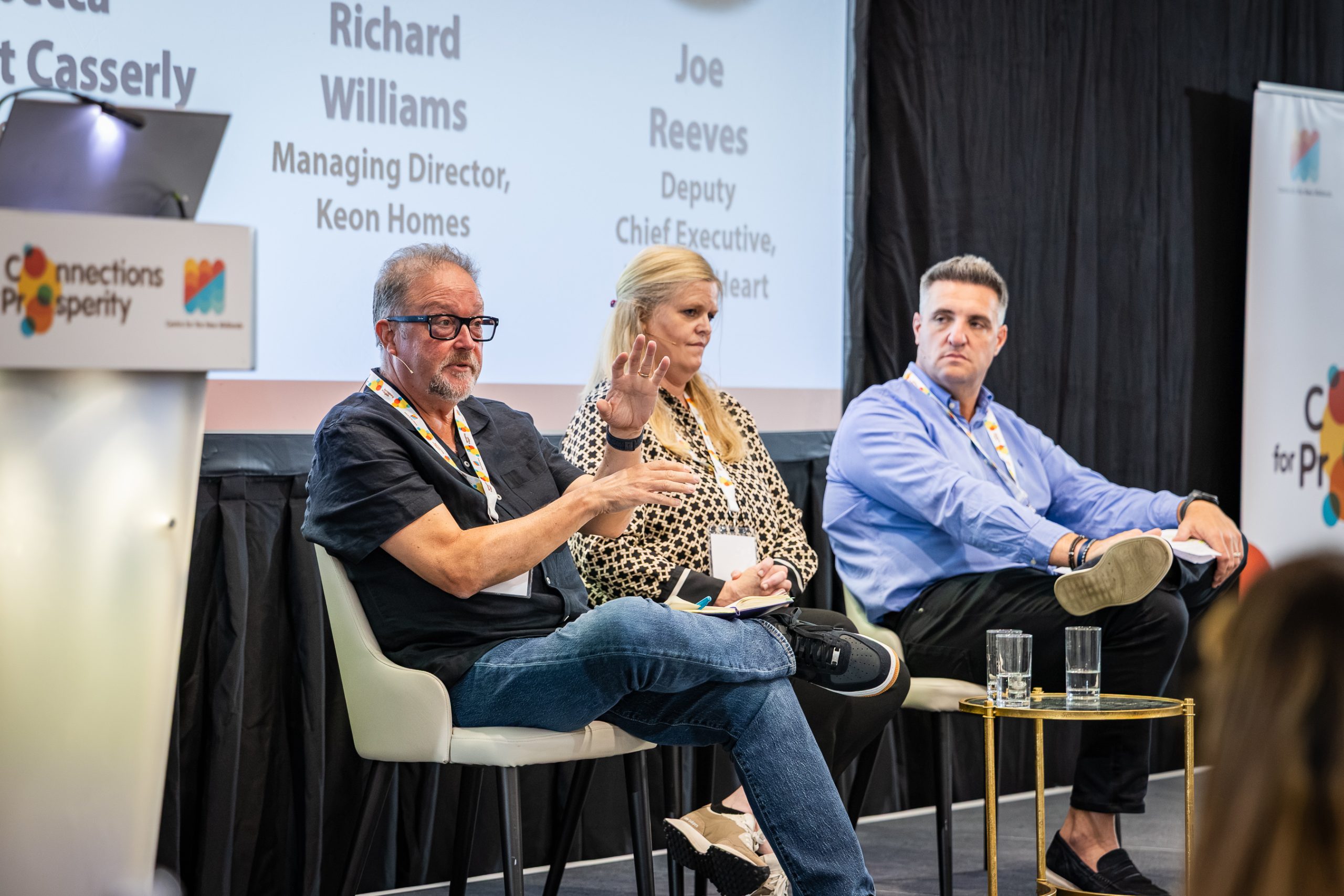
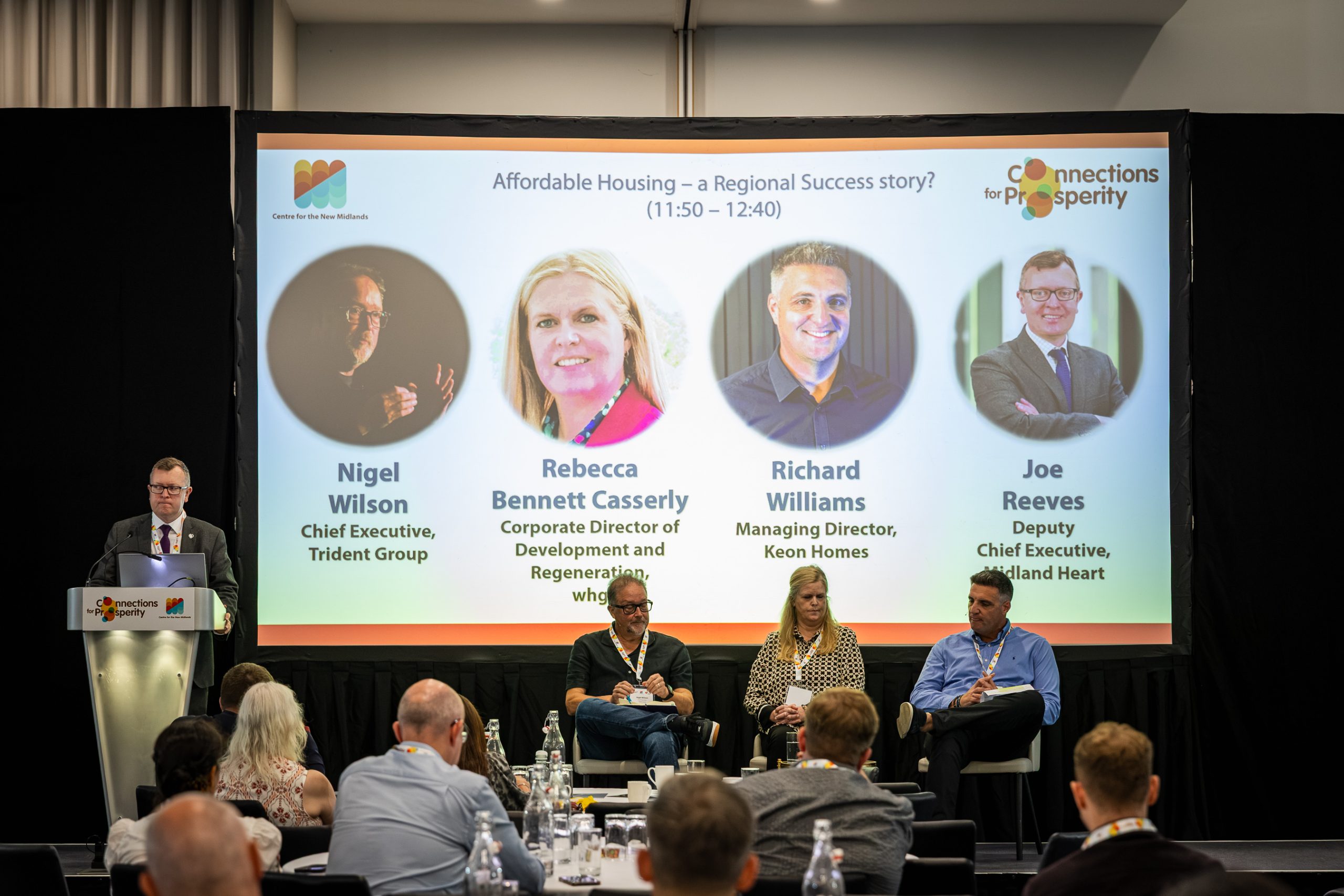
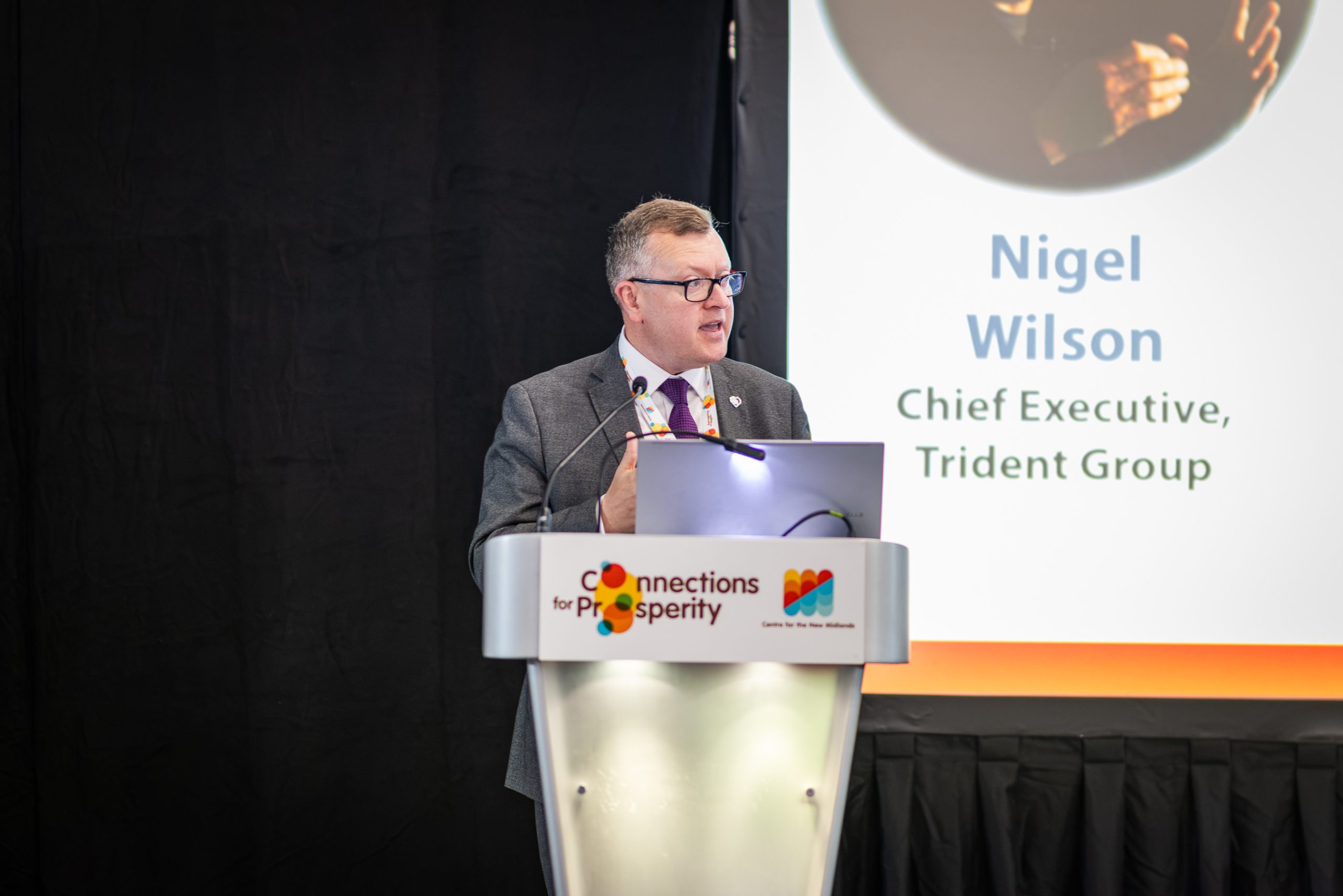
Chaired by Joe Reeves, Deputy Chief Executive of Midland Heart, the discussion featured Rebecca Bennett Casserly (Corporate Director of Development and Regeneration, whg), Nigel Wilson (Chief Executive, Trident Group) and Richard Williams (Managing Director, Keon Homes). Together, they painted a picture of a region with significant momentum, strong partnerships and ambitious regeneration plans, while acknowledging the substantial challenges that continue to limit delivery.
A region with ambition—and growing momentum
The panel agreed that the West Midlands has built an impressive housing delivery framework over recent years. Devolution, combined authority leadership, strategic partnerships with Homes England, and closer collaboration between housing associations, local authorities and developers have created the foundations for long-term growth.
Major regeneration projects across the region—including Druids Heath, Yardley Brook, Port Loop and Lockside in Walsall—were highlighted as examples of what can be achieved when organisations work together with a shared vision. These developments demonstrate not only the delivery of new homes, but wider place-making, environmental improvements and community regeneration.
As Joe noted, the region is no longer short of ambition or institutional commitment. The challenge now is converting that ambition into faster, scalable delivery that genuinely improves people’s lives.
Collaboration is the region’s greatest strength
One of the strongest themes throughout the discussion was the importance of partnership working.
Rather than viewing affordable housing purely through the lens of construction, panellists emphasised the collaboration now taking place between housing providers, councils, developers, government agencies and the combined authority. Speakers argued that this joined-up approach has become one of the West Midlands’ defining strengths, enabling organisations to tackle increasingly complex regeneration projects that no single organisation could deliver alone.
The panel suggested that this culture of collaboration is one of the clearest reasons the region can legitimately describe itself as a housing success story.
Viability remains the biggest obstacle
Despite the optimism, there was little doubt about the scale of the financial challenges facing the sector.
Richard described viability as the single biggest barrier to delivering new affordable homes. Rising construction costs, difficult brownfield sites, higher borrowing costs and reduced land availability are making schemes increasingly difficult to deliver.
Developers are also facing greater financial scrutiny following recent insolvencies within the construction sector, creating additional pressure for both developers and housing associations.
The consensus was clear: without greater financial support and simpler delivery mechanisms, even the strongest partnerships will struggle to meet demand.
Regeneration is about more than building homes
Rebecca highlighted how successful regeneration should create thriving communities rather than simply increasing housing numbers.
Using whg’s Lockside development as an example, she described regeneration as an opportunity to combine mixed-tenure housing, sustainability, high-quality design and long-term investment in place. The discussion reinforced that affordable housing should be viewed as part of wider economic and community regeneration rather than a standalone policy objective.
Social housing and supported housing need renewed focus
Nigel argued passionately that success cannot simply be measured by the number of new homes delivered.
He stressed that existing homes must continue to receive investment while highlighting growing concern about supported housing. With revenue funding becoming increasingly uncertain, many organisations are finding it difficult to sustain the support services that vulnerable residents rely upon.
The panel warned that short-term funding models undermine long-term planning, often forcing providers to repurpose supported housing into temporary accommodation rather than addressing the root causes of homelessness and housing need.
Several speakers called for longer-term funding settlements that recognise housing and support services as inseparable.
Devolution offers an opportunity to move faster
The discussion also explored the opportunities presented by greater regional control over housing funding.
Joe pointed to the successful partnership between the West Midlands Housing Association Partnership and the Mayor, which enabled more than 1,000 homes to be converted from Affordable Rent to Social Rent through targeted grant funding.
While this was described as a major success, panellists also acknowledged that the process took far longer than it should have. Greater devolved powers, they argued, should allow regions to make decisions more quickly and respond more effectively to local housing needs.
Looking ahead
Closing the session, the panel agreed that the West Midlands has every reason to be confident in the progress it has made. The region has stronger partnerships, clearer leadership and a more mature delivery model than a decade ago.
However, the measure of success is no longer whether the right structures are in place—it is whether they result in more affordable homes, more social housing, stronger communities and better outcomes for residents.
The panel concluded that the next chapter for the region will depend on maintaining collaboration, improving viability, securing long-term investment and ensuring that housing policy remains focused on the people it is intended to serve.
Ultimately, the discussion suggested that the West Midlands has earned its reputation as a leader in affordable housing—but its greatest success still lies ahead if it can translate ambition into delivery at the scale the region needs.
Connections for Prosperity 2026 was sponsored by AtkinsRéalis, E.ON, Unity Trust Bank and West Midlands Housing Association Partnership.
If you and your organisation are not yet members of our Reimagining the Region network, click here to learn more about getting involved.
Our network is growing each and every month – make sure you are part of how we shape an even ‘better’ region for all.
To learn more about getting involved or to join our network, please contact Chris Smith (Founder and CEO, Centre for the New Midlands CIC) by emailing chris@thenewmidlands.org.uk