

Social housing is infrastructure in all but name. The homes commissioned under the arrangements now being drawn up will stand and shelter families long after the ministers and mayors who announced them have left office. The landlords who own them cannot easily walk away when a scheme proves harder than expected. The promises made at the outset tend to shape everything that follows. That is why I have been watching the first months of Andy Burnham’s premiership so closely. Power over housing is moving quickly towards the mayors. What concerns me is not so much who will hold that power as who will answer for it when it fails to produce homes.
Nobody should be in any doubt about the Prime Minister’s priorities. As Mayor of Greater Manchester, he pledged at least 10,000 new council homes and asked government for the power to suspend Right to Buy on them. When he promised, in a speech earlier this year, the largest council housebuilding programme since the post-war years, it reportedly drew the loudest applause of the speech. He returned to that promise yesterday in Liverpool, in his first conference speech as Prime Minister, this time with some detail. Councils will be helped to build again on unused public land. Right to Buy will be removed from the new homes being built, though not from anyone in an existing home. Councils will also be given powers to take control of empty homes and bring them back into the public housing stock. Where landlords ignore warnings to improve the worst-quality rented homes, councils will find it much easier to acquire those homes, with legislation if necessary. A leasehold reform bill is promised before Christmas.
What is new is the machinery. At the end of July, the government announced that mayors would receive a share of income tax for the first time, with greater retention of business rates to follow from next spring. Ministers must now justify keeping a power in Whitehall rather than simply assume it belongs there. In August came a consultation, closing on 5 October, on how mayors will use call-in powers already granted by the English Devolution and Community Empowerment Act 2026. The proposed thresholds cover schemes of more than 150 homes, more than 15,000 square metres of commercial space, or buildings over 30 metres. Ten of the fourteen devolved mayors were reported to support the change. The Liberal Democrats do not. Their housing spokesperson, Gideon Amos, has argued that councils should instead be given the resources to deliver affordable homes themselves. It is a fair objection and one I return to below.
The reform with the most far-reaching consequences may be the one least discussed. Matthew Pennycook, the housing minister, has written to mayors about the future of Homes England. The letter has not been published. What is known about it comes from Inside Housing, which reports that it was shared with the paper. On that account, the letter is titled Reforming Homes England: A new place-based offer. It describes the move to an agency led by Established Mayoral Strategic Authorities (EMSAs) as one of the most significant changes in its approach since its creation.
Inside Housing’s reporting goes on to describe Place Delivery Agreements between Homes England, the National Housing Bank and each EMSA. A first wave is due in November, with all agreements in place by April. Joint delivery units could be operating from as early as November. According to the letter, their tasks may include unlocking complex sites, structuring major regeneration, supporting council-led housing, attracting institutional investment and supporting Mayoral Development Corporations and Zones. Until the letter is published, or ministers confirm what it says, none of this can be treated as settled; it is best read as a direction of travel.
The financial picture, by contrast, is unusually firm. The Social and Affordable Homes Programme commits £39 billion over ten years and aims for around 300,000 homes, at least 60 per cent of them for Social Rent. Landlords have a ten-year rent settlement of CPI plus one per cent from April 2026. Housing associations can also bid for £2.5 billion in low-interest loans between 2026 and 2030, although 60 per cent of that sum has been allocated to London. After years of asking for that kind of certainty, the sector now has a good deal of it.
Within the housing programme, however, mayors have not been handed money of their own. Outside London, the programme has no regional targets or ring-fenced budgets. The indicative figures published for each EMSA are expressly neither a ring fence nor a floor. What is on offer is influence over national funds rather than control of them.
The distinction matters more than it might first appear, because of what the mayors themselves have asked for. When the EMSAs set out their priorities for the programme last November, their Social Rent ambitions were remarkably alike. Greater Manchester, Liverpool City Region and the North East each sought at least 60 per cent. South Yorkshire and West Yorkshire sought 60 per cent, whilst the West Midlands sought around 60 per cent. That is, in effect, the national target. If mayors want much the same tenure mix as Whitehall, the case for devolving the programme cannot rest on tenure. It has to rest on something else: which sites come forward and when, as well as whether the homes that get built are the ones a particular place actually needs.
Birmingham shows what that means in practice. In a Westminster Hall debate in February this year, the city’s supported exempt accommodation was described as housing more than 30,000 people in some 11,000 properties, roughly three times the level of 2018. The minister accepted that Birmingham has significantly more of it than anywhere else in the country. At the same time, the West Midlands Combined Authority’s own priorities identify an acute need for larger family homes for rent across many parts of the region. The Prime Minister’s criticism yesterday of absent landlords who are paid through the benefits system but refuse to reinvest in their properties will have been heard with particular interest in the city. A national agency counting completions would be unlikely to register pressures like these. A regional one, working alongside the councils left to manage the consequences, ought to.
In the Midlands, two authorities are now able to act on that kind of knowledge. The West Midlands Combined Authority already held Established status. The East Midlands Combined County Authority gained it in August, along with a larger say in shaping affordable housing programmes. Their ambitions tend to be quoted in the same breath, though they measure different things. The West Midlands aims for 20,000 social and affordable homes over a decade, including 2,000 Social Rent homes a year by 2028. The East Midlands ambition is expressed simply as 100,000 homes across Derby, Derbyshire, Nottingham and Nottinghamshire, with no tenure specified. Without a common yardstick, both will be able to declare success.
Then there is a constraint that no amount of restructuring removes. The Regulator of Social Housing has described landlords as caught between competing priorities: record investment in existing homes, with new building continuing but at a reduced level. Its latest global accounts showed housing associations spending £10 billion on repairs and maintenance in 2024-25, whilst forecasting fewer new homes over the next five years than they had a year earlier. That matches what I see among the housing providers I work with across the region. Agreements that assume those providers can simply build more will overstate what the region can deliver. Direct intervention can change the picture: Homes England bought Nottingham’s former Broad Marsh shopping centre and is working to de-risk the site for private partners, though that kind of intervention could not realistically be repeated on every stalled site.
Right to Buy is unfinished business. The Social Housing Bill, now before Parliament, would exempt newly built social homes from Right to Buy for 35 years. The government’s own impact assessment says the aim is to give councils and providers the confidence to invest in new supply. Inside Housing reported in August that the Local Government Association was seeking an amendment to make the exemption permanent. The Prime Minister’s own words in Liverpool, that the right would be removed from new homes so that they remain available for generations to come, appear to go further than the Bill as it has been described. Thirty-five years sounds generous, but a council deciding whether to borrow in order to build will want to know that the homes it pays for remain available for social rent for their whole life, not just part of it. I hope the Bill is brought into line with the speech.
In my view, five things would give this reform its best chance in the Midlands.
- The first is that both authorities should go into the November discussions with site pipelines already worked up; otherwise, the first agreements will reflect whatever happens to be ready rather than what the region needs.
- Government should say how the reformed agency will serve the parts of the Midlands that sit outside the two EMSA footprints.
- Each agreement should be as clear about money as it is about responsibilities.
- The measures of success should go well beyond completions, taking in family homes brought back into use, households moved out of temporary accommodation and homes brought up to standard.
- And finally, the new planning powers need published criteria and regular public reporting. That would go some way to meeting the Liberal Democrats’ objection. It would also give councils a reason to work with their mayors rather than around them.
The government has chosen to let mayors set the priorities, with the national agency increasingly working to them. I think that is broadly right, since decisions about places are better taken closer to them. Devolution, though, hands over responsibility along with power. When a Place Delivery Agreement falls short, as some may, residents ought to be able to see who promised what and who is accountable for the difference. That question is far easier to settle before the first agreements are signed than after.
This is a personal blog post. Any opinions, findings, and conclusion or recommendations expressed in this article are those of the authors and do not necessarily reflect the view of the Centre for the New Midlands or any of our associated organisations/individuals.
ABOUT OUR AUTHOR:
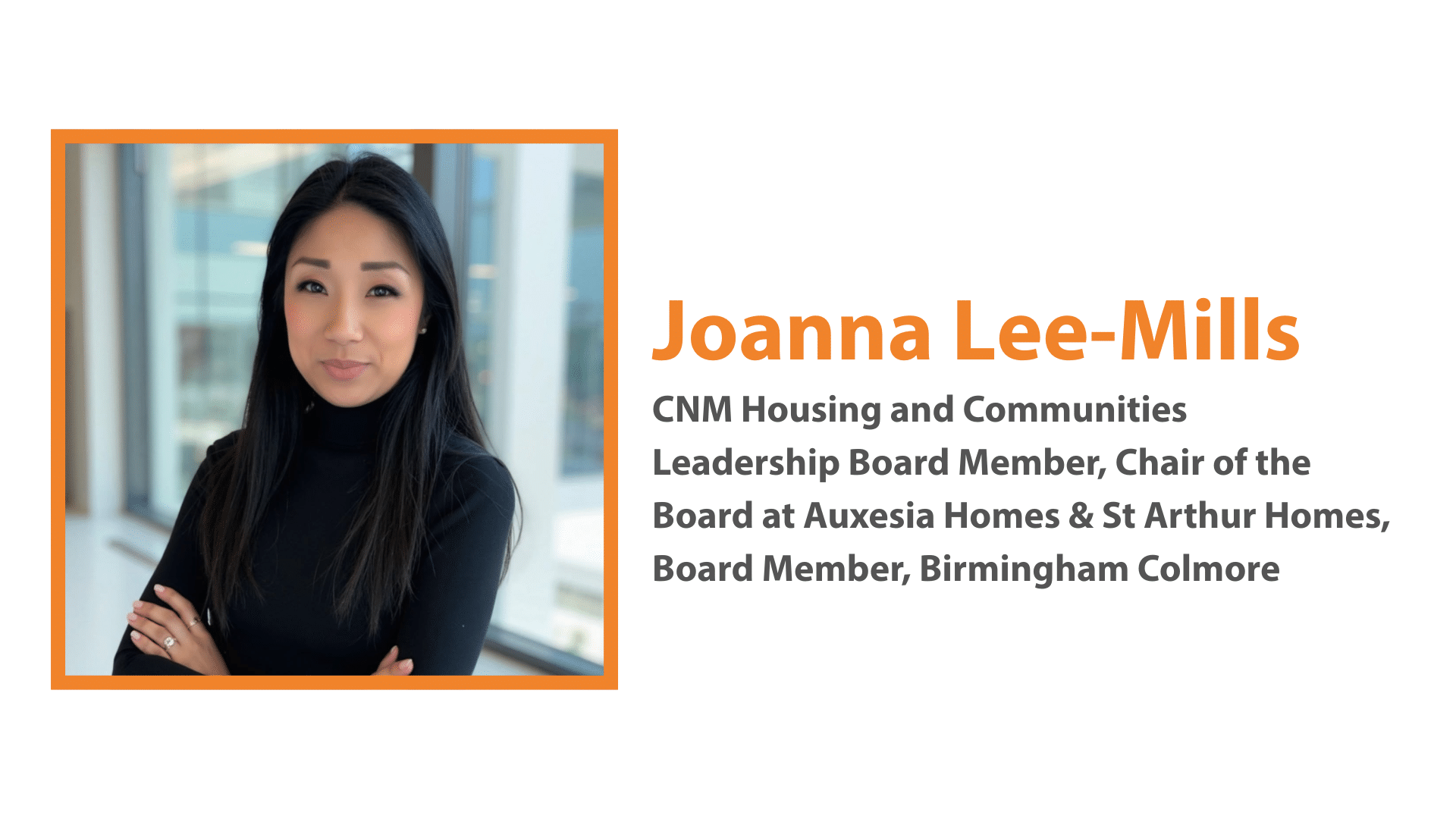
Joanna Lee-Mills is a CNM Housing and Communities Leadership Board Member, Chair of the Board at Auxesia Homes & St Arthur Homes, Board Member at Birmingham Colmore. She writes here in a personal capacity.