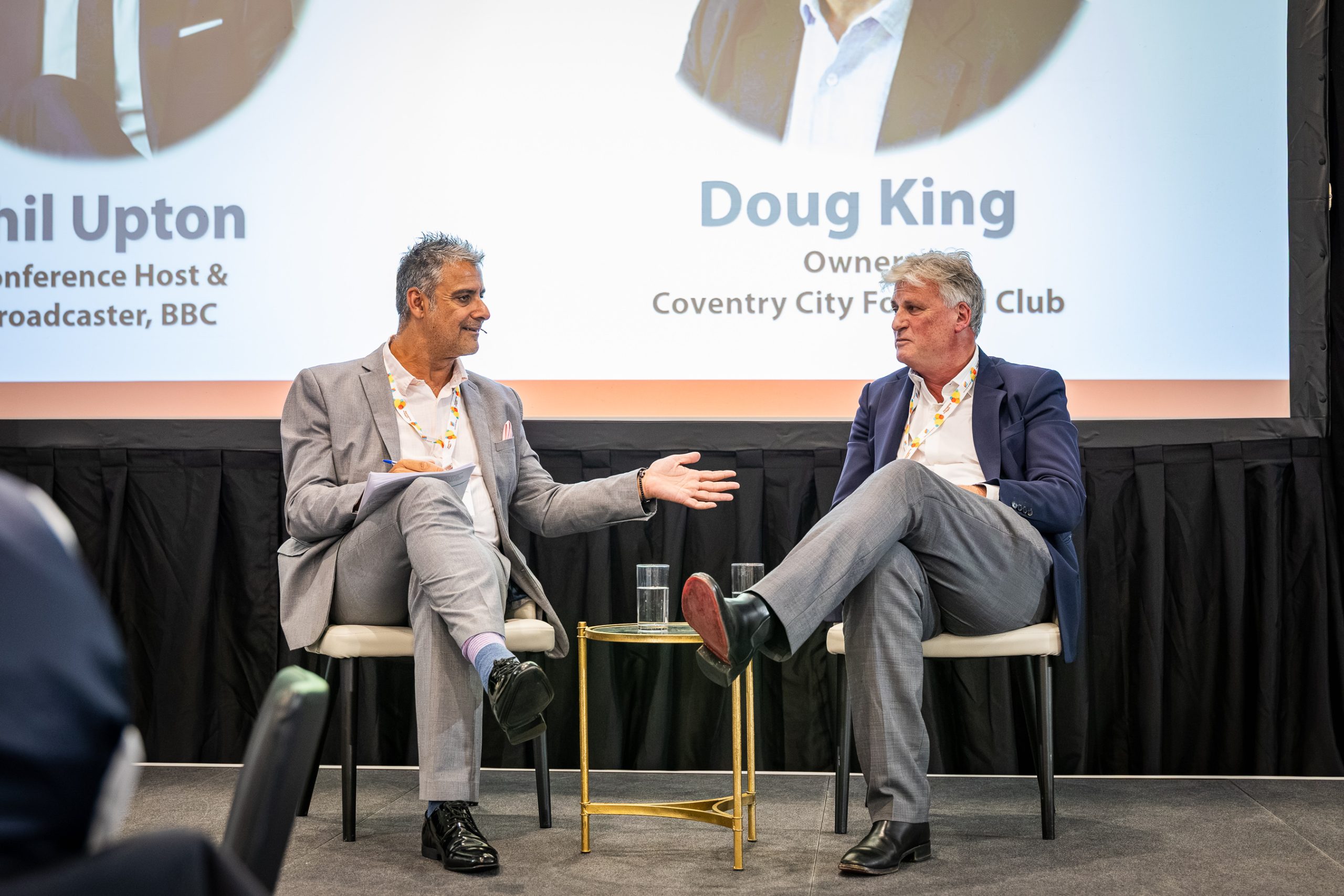
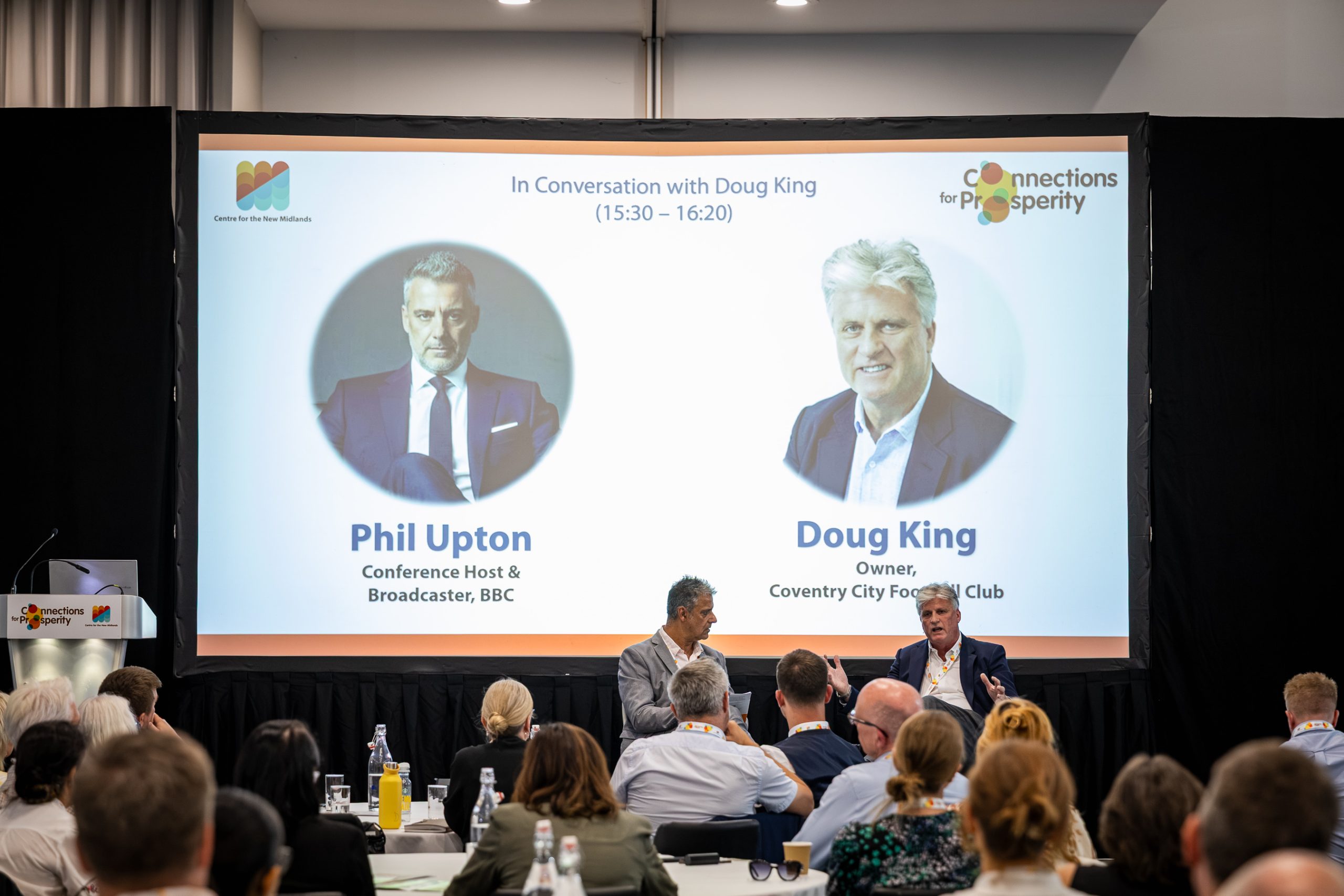
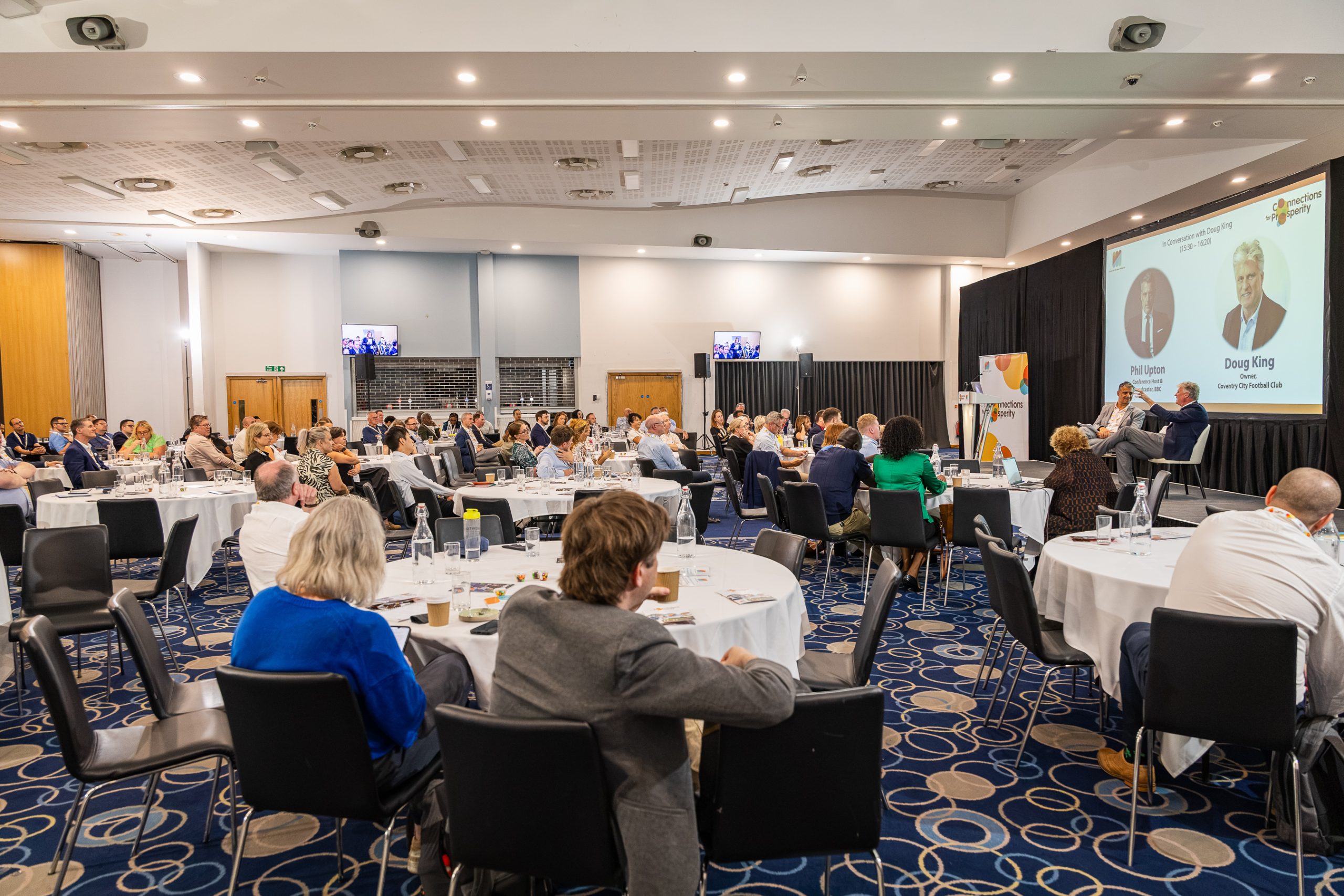
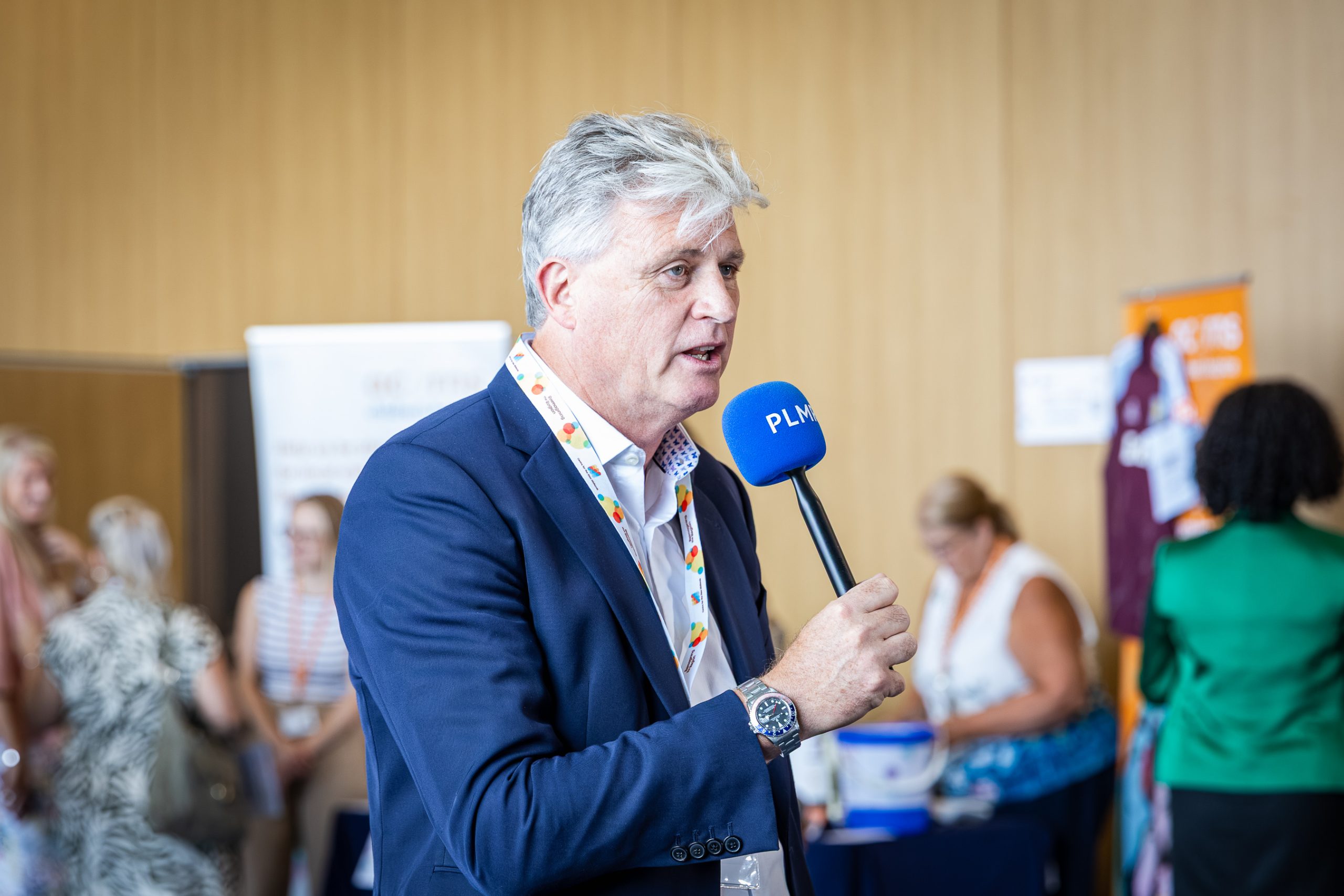
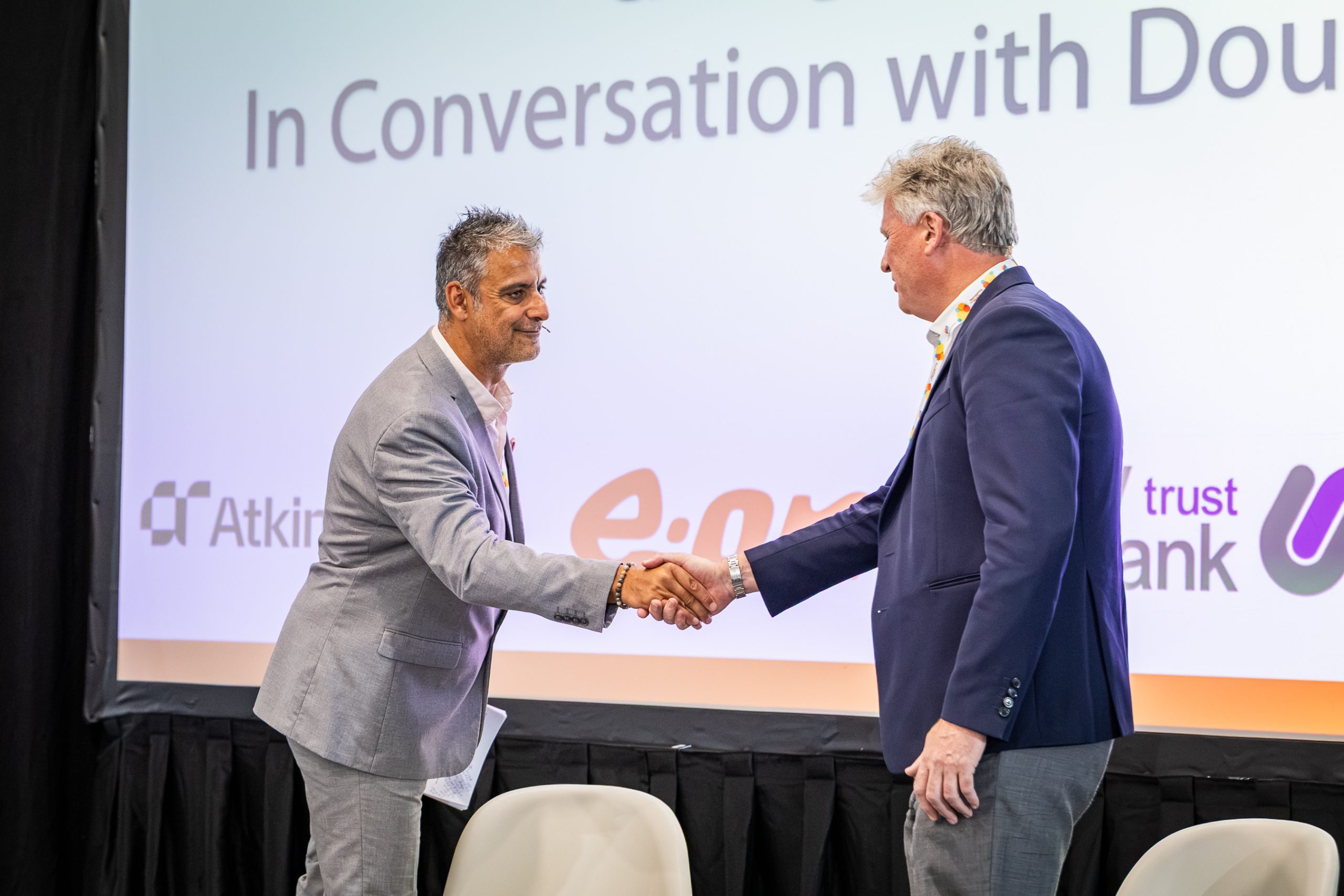
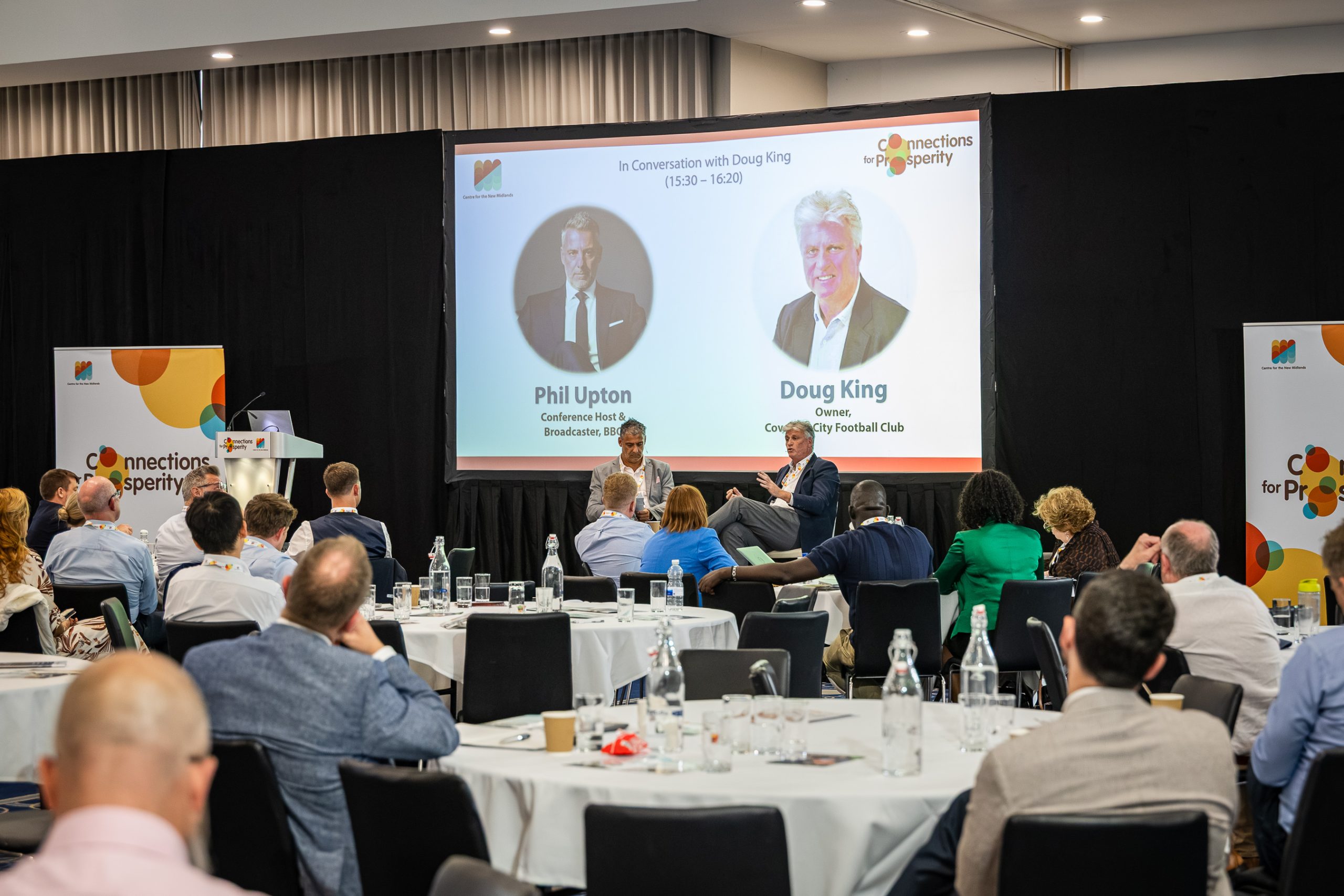
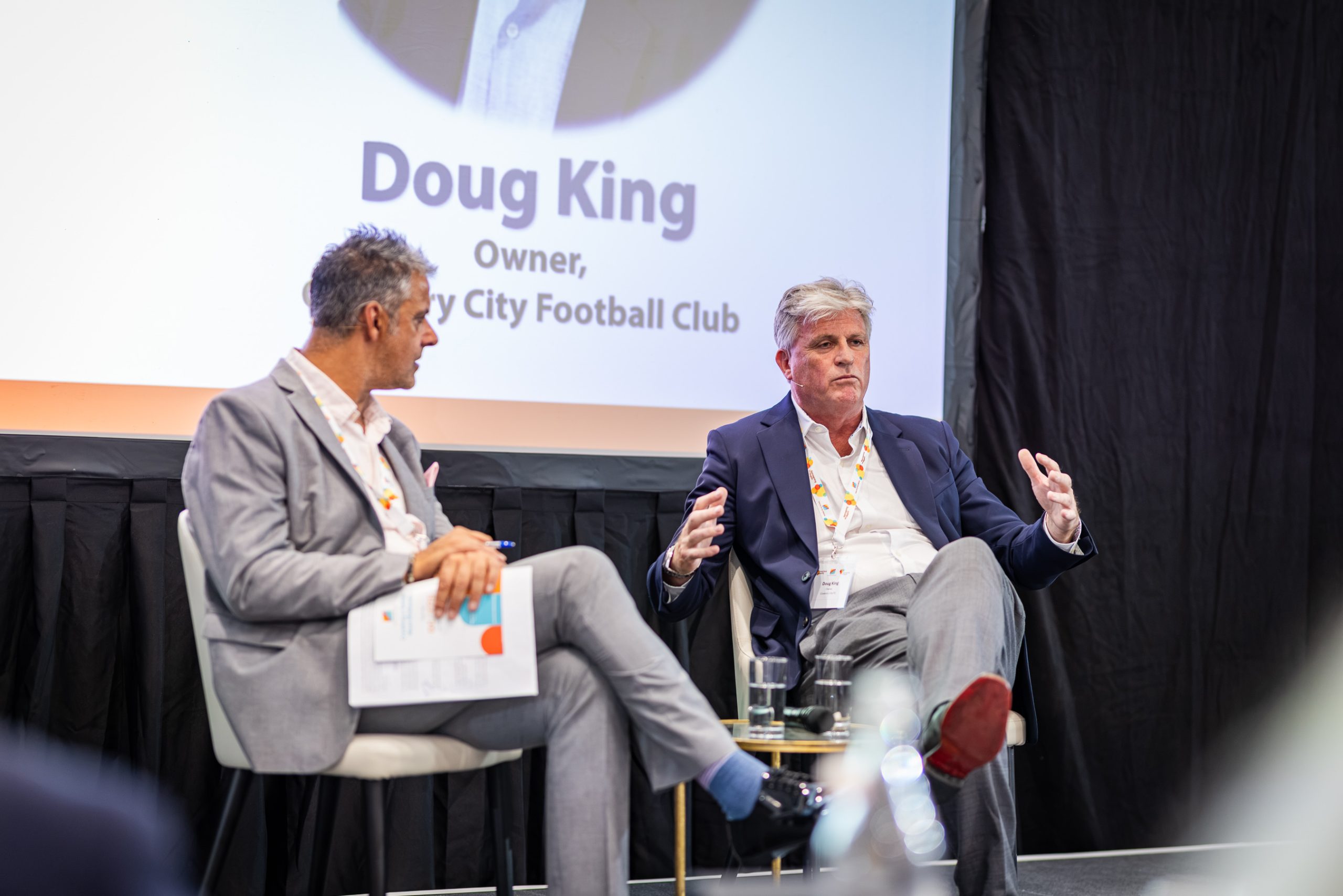
Doug King’s fireside chat with broadcaster Phil Upton explored the role that businesses, football clubs and local leaders can play in driving regeneration, pride and economic growth across the Midlands. Drawing on his experience transforming Coventry City FC, Doug shared his views on skills development, infrastructure, place-making, community engagement and the importance of building success from the ground up.
The conversation centred on a clear message: great places are not created through grand promises alone, but through authentic investment, strong communities and consistent delivery.
Building places people want to visit
A major theme of the discussion was the need for Midlands cities to define and showcase what makes them distinctive.
Doug argued that too often the UK’s identity is dominated by London, with other cities viewed as secondary destinations. He contrasted this with Germany, where cities such as Munich, Hamburg, Cologne and Stuttgart have developed their own global identities and attractions.
His challenge for the Midlands was simple: create destinations in their own right.
“You have to build up great stuff around your cities in the middle of the Midlands and showcase them. People then want to come and look.”
For Doug, Coventry has the ingredients: its university, cathedral, industrial heritage, football club and cultural assets. The opportunity is to connect those elements into a compelling story that attracts visitors, investment and talent.
Football as an economic and community engine
Doug explained that he did not originally set out to buy a football club, but was attracted by the unique influence football can have on communities.
He highlighted the global reach of the game, noting that Premier League football provides an international platform capable of showcasing places around the world. For Coventry, he sees the football club as much more than a sporting organisation — it can become a catalyst for economic activity, tourism and civic pride.
“Football is hugely important to communities and it’s powerful if you get it right.”
The famous Coventry City promotion celebrations, which saw hundreds of thousands of people engage with the occasion, demonstrated the emotional connection between a club and its community.
Doug described the day as one of the best of his life, highlighting how sporting success can create a shared sense of identity:
“People felt pride that their community and their city had done something properly and they were part of it.”
Incremental growth rather than “big bang” projects
One of the strongest themes of the conversation was Doug’s preference for practical, achievable progress over ambitious but unrealistic regeneration plans.
While acknowledging the appeal of major projects such as Birmingham’s “Sports Quarter”, Doug argued that transformation should happen organically.
“I’m all for the big dreams, but I’m more an incrementalist.”
His approach is to first maximise existing assets, prove their value and build momentum. Rather than announcing a multi-billion-pound vision, he believes cities should focus on delivering improvements that create confidence and attract further investment.
Using Coventry’s stadium and surrounding assets as an example, Doug argued:
- Improve what already exists.
- Create successful events and experiences.
- Build reputation and demand.
- Allow larger opportunities to follow.
He compared this approach to infrastructure projects such as HS2, suggesting that large-scale ambitions can sometimes become trapped in complexity and delay.
Infrastructure must match ambition
While Doug emphasised organic growth, he was clear that infrastructure remains a major barrier.
He highlighted challenges around transport links to the stadium, including the limited capacity of the nearby railway station, and argued that investment decisions need to reflect the economic opportunities being created.
His message to local authorities was that infrastructure and regeneration must move together.
“We have infrastructure there that hasn’t been thought through.”
For Doug, a successful Coventry City FC ecosystem depends on making it easy for people to travel, stay, spend time and explore the wider city.
His vision is for visitors who come for a match or event to discover Coventry’s wider attractions — the cathedral, culture, heritage and businesses.
Turning Coventry City into more than a football club
Doug outlined an ambition to develop the stadium and surrounding area into a broader destination.
The future vision includes:
- More concerts and live events.
- Expanded exhibitions and conferences.
- Greater use of the stadium outside matchdays.
- Celebrating Coventry’s heritage as the “Motor City”.
- Creating a place where people visit for multiple reasons.
He argued that the stadium currently has significant untapped potential.
Events such as Ed Sheeran’s concert demonstrated demand, but Doug believes the challenge is scaling this activity through better marketing, facilities and infrastructure.
“We need to make it cool and really happen — somewhere people want to go.”
Investing in people and creating opportunity
Beyond infrastructure and entertainment, Doug highlighted the importance of skills, apprenticeships and opening opportunities for young people.
Drawing on his business background, he emphasised the importance of lowering barriers to entry and helping people begin their careers.
“If you never begin, you never begin.”
He believes the Midlands has a strong pool of young talent and that businesses have a responsibility to create pathways into employment.
This philosophy extends into Coventry City’s community work, where accessibility and visibility are key. Doug described visiting schools with trophies and engaging directly with children because young people need to see what is possible within their own community.
Modernising Coventry City FC: getting the basics right
Doug reflected on the transformation required when he took ownership of the club.
One of his biggest surprises was the condition of the training facilities, which he described as far behind modern football standards.
Rather than immediately prioritising player recruitment, he focused on creating the right environment for success:
- Modern training facilities.
- Better working conditions.
- Professional standards.
- A stronger culture.
His belief was that sustainable success comes from investing in foundations.
“You need a cool training ground to have good players who want to come and work every day.”
Partnerships with local businesses
Doug also highlighted the importance of working with local suppliers and SMEs.
He praised the quality of regional businesses involved with Coventry City’s projects, noting the expertise and craftsmanship available locally.
His message was that major organisations should use their influence to create opportunities throughout their supply chains.
Leadership lessons: authenticity, transparency and momentum
Throughout the conversation, Doug returned to the importance of culture and leadership.
He highlighted several principles:
Be authentic
Success cannot simply be announced — it has to be earned.
Build trust
Transparency and accessibility help bring people together.
Create momentum
Small wins build confidence and encourage bigger opportunities.
Focus on fundamentals
Strong foundations matter more than short-term headlines.
He credited the progress at Coventry City to having the right people, processes and collective belief.
Key takeaway: creating a Midlands success story
Doug’s central argument was that regeneration is not driven by one project, one policy or one investment decision. It is created by combining strong institutions, community pride, skilled people and practical action.
His vision for Coventry — and potentially the wider Midlands — is to create places that people actively choose to visit, invest in and be proud of.
The message from the conversation was clear:
Start with what you have. Make it exceptional. Build momentum. And let success attract the next opportunity.
Connections for Prosperity 2026 was sponsored by AtkinsRéalis, E.ON, Unity Trust Bank and West Midlands Housing Association Partnership.
If you and your organisation are not yet members of our Reimagining the Region network, click here to learn more about getting involved.
Our network is growing each and every month – make sure you are part of how we shape an even ‘better’ region for all.
To learn more about getting involved or to join our network, please contact Chris Smith (Founder and CEO, Centre for the New Midlands CIC) by emailing chris@thenewmidlands.org.uk