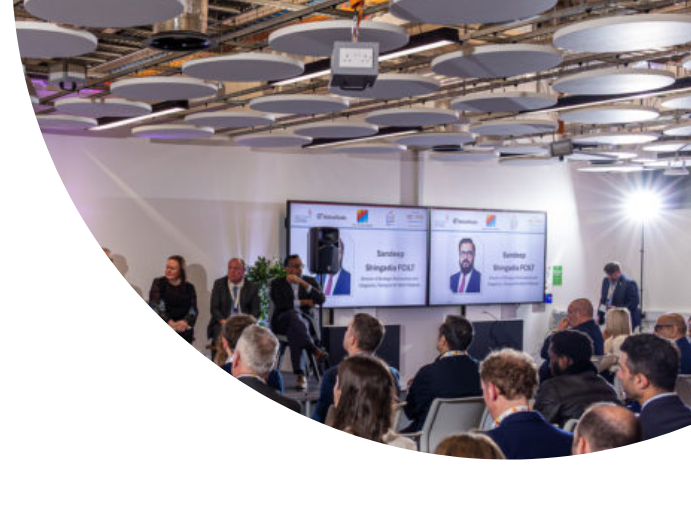
The recent Skills to Success roundtable, convened by the Centre for the New Midlands Employability and Skills Leadership group, brought together employers, educators, policymakers and sector leaders to talk frankly about skills and employability across our region. What emerged was not a shortage of ideas or goodwill, but a shared frustration that too much effort still fails to translate into lasting, system level impact.
That frustration will feel familiar to many employers, I’m sure.
Skills gaps persist, the ‘usual’ recruitment pipelines are no longer paying off, and repeated recruitment cycles are costly and time-consuming. Youth unemployment remains stubbornly high, but well-intended businesses are still not sure how to make an impact. Work experience is consistently cited as one of the most effective interventions yet remains difficult to scale without placing additional pressure on already stretched teams. At the same time, the wider skills system continues to feel fragmented, shaped by short policy cycles and a lack of funding.
What struck me most, however, was that these are not just skills problems, they are capability problems, and, to my mind, at the centre of those capability gaps sits leadership.
Skills gaps are real, but capability gaps run deeper
During the roundtable, employers raised familiar concerns,
- qualifications that do not reliably signal readiness
- an increased emphasis on communication and problem solving
- uncertainty about how prepared young people are for the reality of work.
None of this is new, but what is more uncomfortable, is how consistently the responsibility to adapt is often placed solely on young people themselves.
Early career entrants are expected to be resilient, flexible and productive almost immediately. Yet many organisations are still managing unclear role expectations, inconsistent management practice and limited capacity to support new talent beyond initial induction. We talk at length about work readiness, but rarely with the same honesty about workplace readiness.
For employers, this gap has a cost.
It shows up in drawn-out recruitment, poor retention that is quietly normalised, and technically strong employees who struggle to empower and develop colleagues as they move up the ladder. These costs are rarely captured in performance data, but they impact productivity, morale and growth every day.
There is a leadership dimension here that often goes unaddressed.
Creating meaningful work experience, engaging confidently with education providers, and supporting non-traditional entrants all rely on leadership capability. For SMEs in particular, this is not trivial. Asking employers to absorb early career talent without addressing leadership capacity is, in effect, asking them to carry risk without support.
What business schools can no longer hide behind
The roundtable also served as a reminder that education providers, including business schools, need to be honest about their own role. Employers want graduates who can operate in ambiguity, communicate clearly and make decisions with incomplete information; we all recognise that ‘human-centric’, or soft skills, have got even harder They do not want rhetoric, frameworks or ever‑longer inductions, to compensate for gaps elsewhere.
Business schools can no longer treat employability reactively, as something that is frequently ‘talked’ about, happens at the end of a programme, or something inferred later from destination data. If employability is genuinely the outcome we want, then proactive exposure, practice and feedback must be designed into learning from the start and fully embedded across curriculum, then monitored for engagement and impact. With working lives extending, and technology accelerating, we need to build upskilling, transferable skills and resilience into our workplaces and education.
At University College Birmingham (UCB) Business School, this has meant deliberately designing learning that brings employer expectations to the surface early and often, rather than treating industry experience as a bolt on.
We are offering an ‘Industry Skills Guarantee’ to all our students, but this hasn’t happened by accident. The guarantee includes live industry briefs, simulations, assessed collaboration with external partners, challenge-led workshops with our ‘Professors for a Day’ and leadership practice embedded across the curriculum, rather than reserved for final year projects. We listened to our students, staff and stakeholders and created this Guarantee in response to their needs and to offer reassurance on the readiness of our graduates.
Most of our students are from backgrounds that may not have traditionally engaged with higher education, they are then often less able to support with the next steps, so the onus is on us to provide insight and pathways into careers.
Alongside this we’re working to support employers in hiring and retaining graduates, in developing their own leadership capabilities and encouraging more to work with us to embed industry into the everyday curriculum.
This kind of approach is not unique, and the roundtable highlighted encouraging practice across the region. The challenge is not momentum, but coherence. Activity alone does not create a system that works.
Leadership as the multiplier
One of the most important contributions of the CNM Employability and Skills Leadership Board is its framing of leadership as a productivity issue rather than a developmental “nice to have”.
Leadership capability is the multiplier that determines whether interventions scale or stall.
For employers, leadership in this context is not about titles or succession planning. It is about whether early career hires receive clarity, feedback, and challenge quickly enough to become key contributors rather than passengers. In many cases, small improvements in supervisory confidence unlock more value than another recruitment campaign or longer induction programme.
Leadership also determines the quality of work experience, placements, and internships, far more than its duration will. It affects whether employer engagement feels transactional or genuinely developmental, and whether organisations feel confident recruiting from non‑traditional backgrounds. These are practical, commercial concerns that directly shape talent pipelines.
Students, meanwhile, can experience leadership long before they hold job titles. They encounter it in classrooms, group work, placements, and part-time roles. If we want graduates who are adaptable, ethical, and commercially aware, then they need repeated opportunities to practise leadership behaviours in supported, psychologically safe, low‑risk environments. That is as much a teaching and learning issue as it is an employability one, and we are working on it every day.
From conversation to contribution
The real value of the Centre for the New Midlands roundtable was not simply the conversation itself, but the opportunity to shift from commentary to contribution. The harder question is what happens next, and I know I wasn’t the only one keen to follow up with actions.
If we are serious about improving skills and employability, we need to move beyond isolated initiatives towards deliberate system building. That requires closer alignment between employers, educators and policymakers, and a willingness to co‑design solutions rather than endorse them from a distance.
From an employer perspective, working with a business school should reduce risk, not increase it; save time, not consume it; and result in people who are productive sooner.
That is the standard we should hold ourselves to.
At UCB Business School, I work alongside colleagues with deep industry experience, and we actively support them to sustain and extend that through ongoing employer engagement. We are focusing our effort on leadership and employability development that works in real organisational conditions, not idealised ones. The shift from consultation to co‑design is where collaboration begins to deliver value on all sides.
If there is one thing the roundtable reinforced, it is that the region does not need more initiatives. It needs capacity, coordination, and confidence. Skills matter, but leadership determines whether those skills translate into opportunity, productivity, and long-term impact.
If we are serious about skills, we must be serious about leadership, not as a programme added at the end, but as a practice that runs through the whole system and continues throughout our careers.
This is a personal blog post. Any opinions, findings, and conclusion or recommendations expressed in this article are those of the authors and do not necessarily reflect the view of the Centre for the New Midlands or any of our associated organisations/individuals.
ABOUT OUR AUTHOR:
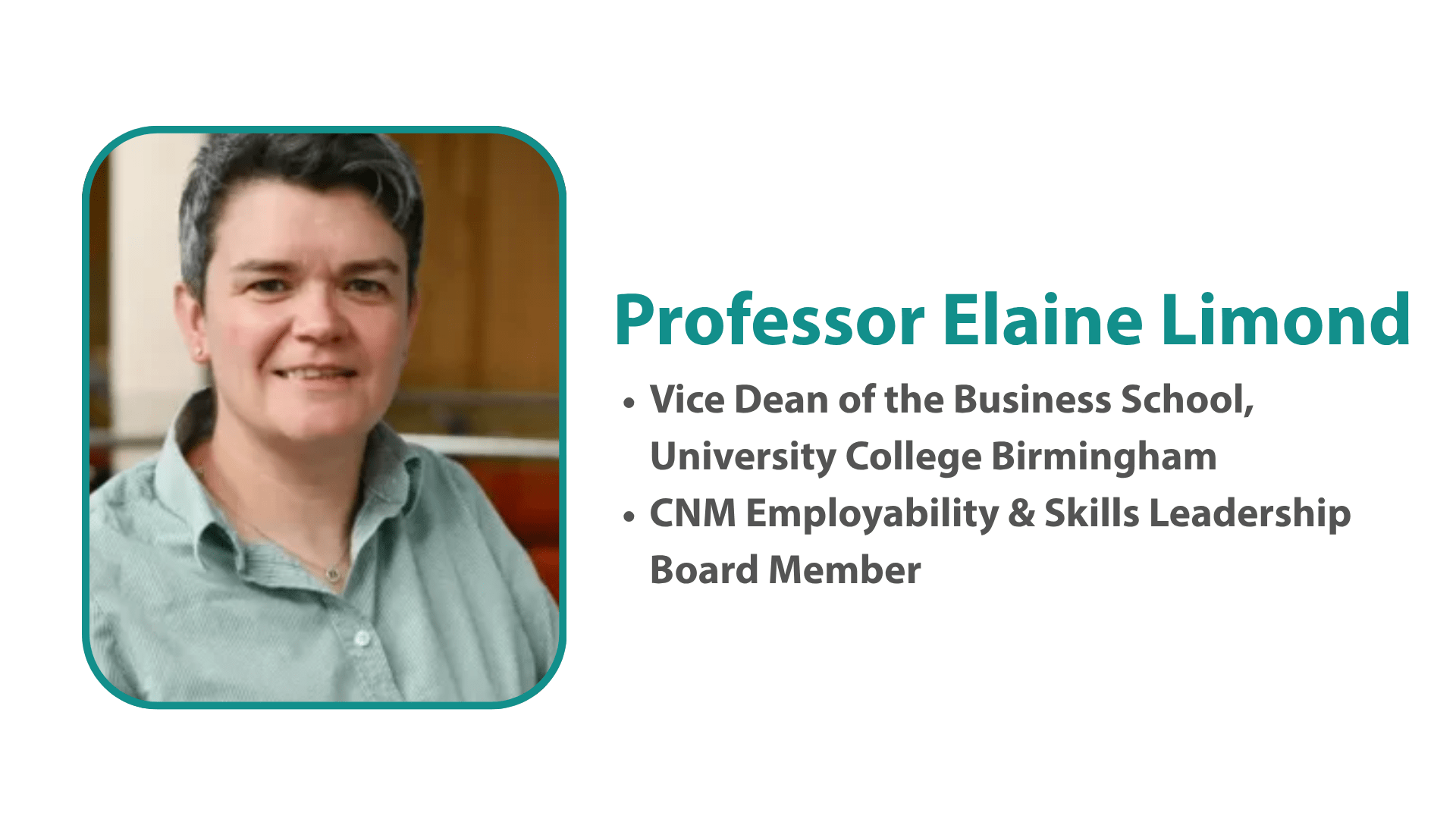
Professor Elaine Limond is Vice Dean of the Business School at University College Birmingham, where she leads strategy, employer engagement and employability across a strongly vocational portfolio. She has over 20 years’ experience working across further and higher education, with a clear focus on skills development, workforce readiness and progression into employment.
Elaine’s background also includes elite sport, having worked as a performance coach for the Rugby Football Union and England Under 20s. This experience informs her practical, outcomes focused approach to leadership, talent development and high performance cultures.
She is an experienced leadership coach and mentor, holds an Executive MBA, and currently serves as an independent college governor and charity trustee. Elaine is undertaking a Doctorate in Business Administration, focused on leadership and talent pipelines within education and skills systems.