
America offers a compelling case study in data centre development but not the one we might expect. Loudoun County, Virginia, hosts the world’s largest concentration of data centres, handling of the majority of global internet traffic. This infrastructure achievement has earned it the nickname ‘Data Centre Alley’. Yet this rapid expansion comes at a significant cost: individual facilities can consume up to five million gallons of water daily, equivalent to the needs of a town of tens of thousands.
As concerns mount among local communities and politicians about the environmental impact of data centre construction, the lesson for the UK is clear. We can learn from America’s experience but we cannot simply replicate its approach.
The UK faces distinct constraints that demand a different strategy. With roughly 40 times less land than the United States, we cannot match American scale through geographic expansion alone. To remain competitive in global AI development, our infrastructure must balance construction opportunities with environmental commitments and regulatory frameworks. Without this balance, we risk undermining the sustainability standards that set us apart.
Data centre opportunity in the West Midlands
The West Midlands is emerging as a significant AI technology hub. There are already 24 data centres operating in the region, with further construction plans are underway, signalling substantial growth potential for AI infrastructure development.
These plans are supported by a robust existing ecosystem. Nearly 70,000 people work across 140 AI companies in the region, creating a foundation for competitive industry growth. The combination of established workforce, existing infrastructure and planned expansion demonstrates the West Midlands’ ambition to become a leading centre for AI technology in the UK.
The greenbelt and sustainability dilemma
This opportunity comes with significant environmental challenges. The West Midlands contains 264,500 hectares of greenbelt land, representing approximately 20.3% of its total area.[1] This is the highest proportion of any UK region. While greenbelt sites may appear easier to develop, they represent protected land that should be a last resort for construction. Given this region’s unique position, prioritising brownfield development becomes essential to protecting ecosystems and meeting our environmental commitments.
The energy demands compound this challenge. UK data centres currently require roughly 1.6GW of power, equivalent to the electricity consumption of several million homes. These facilities operate continuously, consuming substantial electricity for both equipment and cooling systems. The National Energy System Operator (NESO) has warned that planned data centre expansion will make achieving Labour’s Clean Power 2030 initiative significantly more difficult. To address this concern, the UK must adapt its approach to data centre adoption.
Innovation through design
Yet there are reasons for optimism. Sustainable approaches to data centre construction are gaining traction through innovative techniques.
Mace construction, for instance, has partnered with developer Pathfinder Clean Energy (PACE) to deliver low-carbon data centres in the UK. These facilities will use renewable electricity and onsite energy storage to support high-performance AI operations, with construction of one of the first sites beginning in the West Midlands in 2026.
The University of Birmingham offers another model. Its newly completed research data centre features an innovative water-cooling system, the first of its kind at a higher education institution in the UK. This technology removes excess heat more efficiently and in doing so allows computer systems to run for longer, demonstrating how design innovation can address environmental concerns.
These projects show that the West Midlands is actively working to align AI infrastructure growth with environmental responsibility.
Advancing smarter infrastructure for a sustainable future
Ensuring responsible data centre development requires acknowledging these facilities as active components of our broader energy ecosystem, with direct implications for power generation, water usage and local communities.
The UK needs coherent government policy that establishes clear objectives and procedures for planning, powering, regulating and operating data centres in this dynamic period of AI development. This policy framework must prioritise collaboration between government officials, landowners, operators, facility providers and the wider society. Without meaningful engagement across these stakeholders, we cannot achieve a fair and balanced approach.
Done well, this strategy enables the UK to pursue AI and digital objectives in a controlled, sustainable manner. It positions the West Midlands as leaders in responsible AI infrastructure whilst capitalising on significant economic opportunities. Crucially, it supports future technological demands whilst minimising negative impacts on ecosystems and communities.
The UK has an opportunity not just to build innovative data centres but to build them better. The question is whether we have the foresight and commitment to do so.
This timing is particularly significant given the Chancellor’s recent Mais lecture, where she outlined government priorities for both AI investment and fiscal devolution as central pillars of economic growth. With a £500 million sovereign AI unit and plans to allow regional leaders a share of national tax revenues starting with income tax, the West Midlands is uniquely positioned to leverage these dual agendas. By establishing a regional framework for sustainable data centre development now, the region can demonstrate how devolved powers and AI infrastructure investment can work in tandem to deliver both economic growth and environmental responsibility – precisely the model the government is seeking to unlock across England’s regions.
[1] https://urbanistarchitecture.co.uk/how-to-get-planning-permission-for-building-on-greenbelt-land-in-the-uk/
This is a personal blog post. Any opinions, findings, and conclusion or recommendations expressed in this article are those of the authors and do not necessarily reflect the view of the Centre for the New Midlands or any of our associated organisations/individuals.
ABOUT OUR AUTHOR:
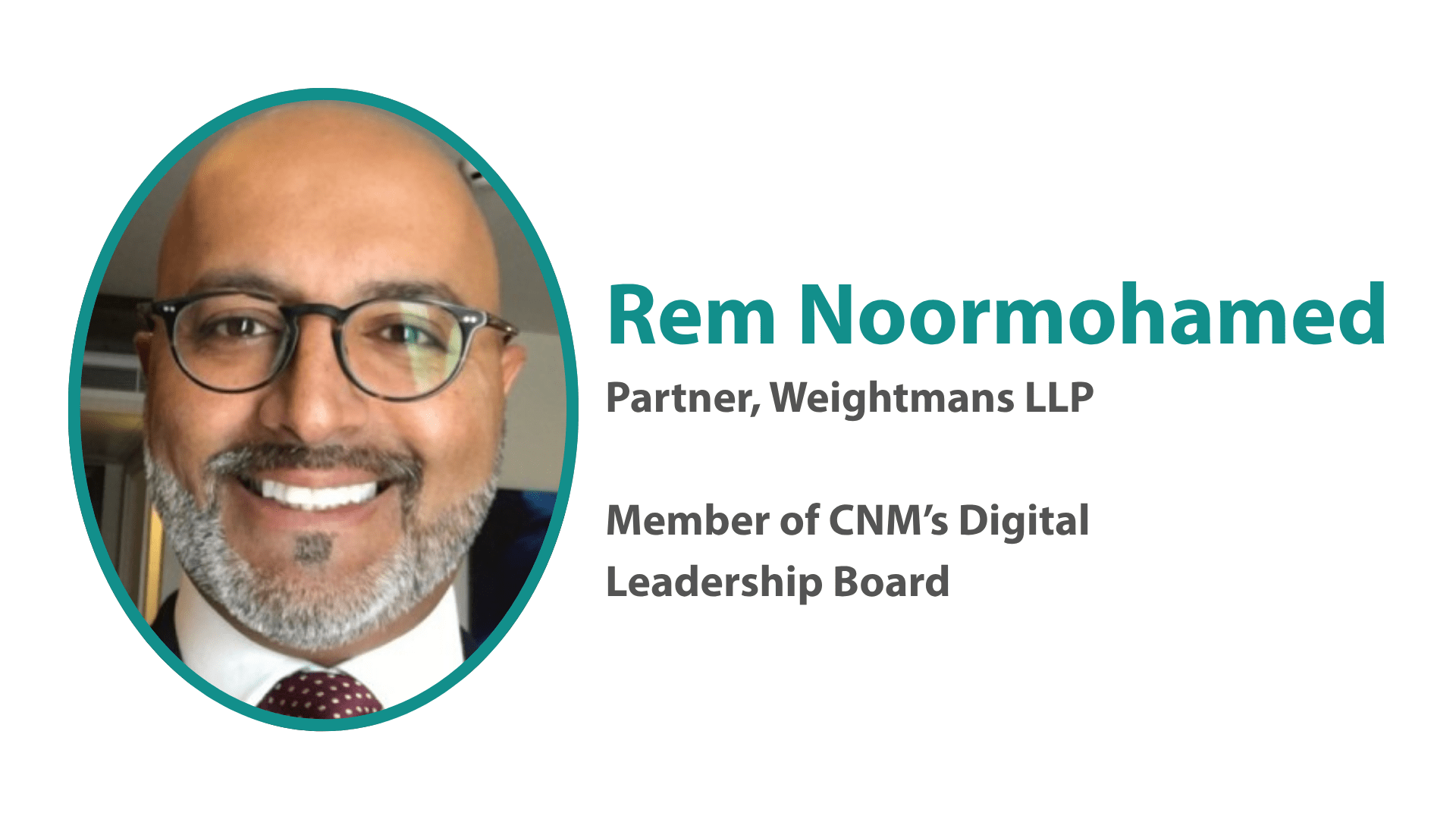
Rehman (Rem Noormohamed) – Rehman (Rem) Noormohamed | LinkedIn
Independently ranked by UK legal directories as a ‘leading individual’ and expert in his field for AI/ML, IT, telecoms, privacy & cybersecurity, IP and UK/EU competition law; and for complex business change and digital transformation projects.
An Industrial Professor at University of Bristol Law School. Research area: Legal, regulatory and engineering design challenges in fully autonomous AI driven safety critical systems.
Core Member of the UK Information Commissioner’s Tech Advisory Panel, advising on the development and impact of emerging technologies and innovation business models on privacy and information rights.
Dual qualified as a solicitor and IT/telecoms consulting engineer, with 28 years of first hand technical & management consulting, legal and strategic leadership experience. 21 years of which being spent in SLT roles – such as in the senior equity partner group (law firms)), CIO, and executive, NED and trustee board member.
Work covers UK, EU, US and Middle East cross-border advisory, transactional and regulatory matters, acting for supply & customer-side fast growth, listed (FTSE & NASDAQ) and institutional clients – focusing on strategic delivery & business critical matters (including governance, risk and compliance).