Labour’s Transport Secretary, Heidi Alexander, and the Mayor of the West Midlands, Richard Parker, have announced new plans to bring the West Midlands’ bus network under public control. On Monday, the West Midlands Combined Authority (WMCA) approved the acquisition of National Express’s West Midlands bus operation.
This effectively brings buses in the West Midlands into public control via a franchising model. The Mayor’s announcement has come out of nowhere, during the middle of the summer where there is little room for scrutiny, and could have very damaging consequences for the people of the West Midlands.
Richard Parker claims that his action will ‘protect West Midlands bus services’ and give the WMCA ‘greater control over bus routes, timetables and fares.’
But in reality, if we look beyond the blatant politicisation of this announcement, there is no doubt that the people of the West Midlands are going to bear the brunt of this rushed policy. What evidence suggests a public authority can run a transport network more efficiently than a private enterprise? Behind the political posturing, local taxpayers will ultimately bear the cost.
Firstly, I fear the shift towards a publicly controlled model means that the hardworking West Midlands taxpayer will be responsible for the risks associated with this grandiose acquisition. With this change of approach, Richard Parker is effectively saying that if he can’t successfully run this organisation, he doesn’t care if the taxpayer bears the costs down the line. We have no idea how much this could end up costing, leading to uncertainty about the region’s finances.
Perhaps the real reason Parker is doing this is because he is seeking to improve the trajectory of his own political career just like the new Prime Minister. Andy Burnham has long claimed that Manchester’s Bee Network of buses are one of the flagship success stories of his time as Mayor of Greater Manchester.
However, Burnham’s busses are the beneficiary of huge public subsidies. The network is funded by hundreds of millions of pounds of taxpayer money. So much so that the boss of one of Britain’s biggest private bus firms has claimed that Burnham’s bus revolution has been a costly ‘smoke and mirrors’ flop.’
Burnham’s whole network and success story is reliant on handouts from central government, some of which would have come from previous Conservative administrations. So Parker is effectively going to be doing the same thing for the West Midlands. Rather than work with providers to create an environment that allows the West Midlands’ bus network to thrive, Parker is going to go begging for more money from the taxpayer. That is not leadership.
But with the public finances as they are under this Labour government, Parker should expect very little. Economic growth is stagnant and inflation is higher than it should be. This leaves little room for more money for public services, and I doubt the Government will see Parker’s bus network as their top priority.
He will have to borrow, cut services elsewhere and raise taxes. Who will lose out? The people of the West Midlands.
Replicating this model during a period of economic stagnation and elevated inflation is fiscally irresponsible. Local authorities cannot rely on central government bailouts to cover revenue shortfalls, instead Parker is betting on the taxpayer bailing them out.
Crucially, even when you consider all the handouts Burnham managed to get for his network, when you look into the public’s view on Manchester’s bus network, it’s hard to paint a truly positive picture. Greater Manchester’s buses have had mediocre ratings in customer satisfaction surveys undertaken by Transport Focus, ranking 26th out of 43 local authorities in England last year. Between 13pc and 16pc of Bee Network journeys were deemed unsatisfactory at its three operators, compared with just 3pc at Glasgow-based McGill’s.
So despite all the noise about Burnham’s bus revolution in Manchester, replicating that model does not guarantee results, especially with the challenging fiscal outlook in the years ahead.
Furthermore, Richard Parker has also scandalously sidelined any opportunity for these plans to be scrutinised and held to account. Effectively nationalising the region’s bus network is a major shift in policy. Political leaders, businesses and the public therefore have a right to scrutinise these plans. Parker hasn’t allowed for it.
The Mayor is pursuing franchising as his own personal adventure. He hasn’t allowed for meaningful debate about the merits of bringing businesses into public ownership. As we can see with the Manchester model, as soon as you look into these networks in any kind of detail, there is far more going on and ultimately more taxpayer money going into these organisations. Where is the business case demonstrating value for money for the people of the West Midlands? If it is loss making now, how will Parker make it turn a profit? Or is his plan simply to raise more debt and raise more taxes? Parker shouldn’t be scared of these questions, he should be confident in himself and his policy to answer them.
In addition, ever since pledging to bring buses under public ownership, Parker has effectively tied the private operator’s hands together. No sensible business owner would take steps to invest into their business when they know franchising is coming down the track.
This means that businesses couldn’t plan for the future and seek to turn things around. Instead, Parker has sent a blank cheque to other businesses indicating that they too should heavily consider the prospect of being nationalised. This drives uncertainty and sows more instability. It is reckless and irresponsible.
The Mayor’s announcement is going to drive uncertainty into our region. It’s also going to have real world consequences for hardworking West Midlanders who will be forced to pay more tax to subside the Mayor’s extravagant and costly plans for our bus network.
Richard Parker should get back to the drawing board and rethink this potentially damaging decision. These changes need to be properly scrutinised and held to account unless he seems intent on taking more money away from hardworking taxpayers. The people of the West Midlands deserve answers and accountability from their Mayor.
This is a personal blog post. Any opinions, findings, and conclusion or recommendations expressed in this article are those of the authors and do not necessarily reflect the view of the Centre for the New Midlands or any of our associated organisations/individuals. The Centre for the New Midlands is a non partisan organisation, with an interest in representing policy positions from across the entire political spectrum.
ABOUT OUR AUTHOR:
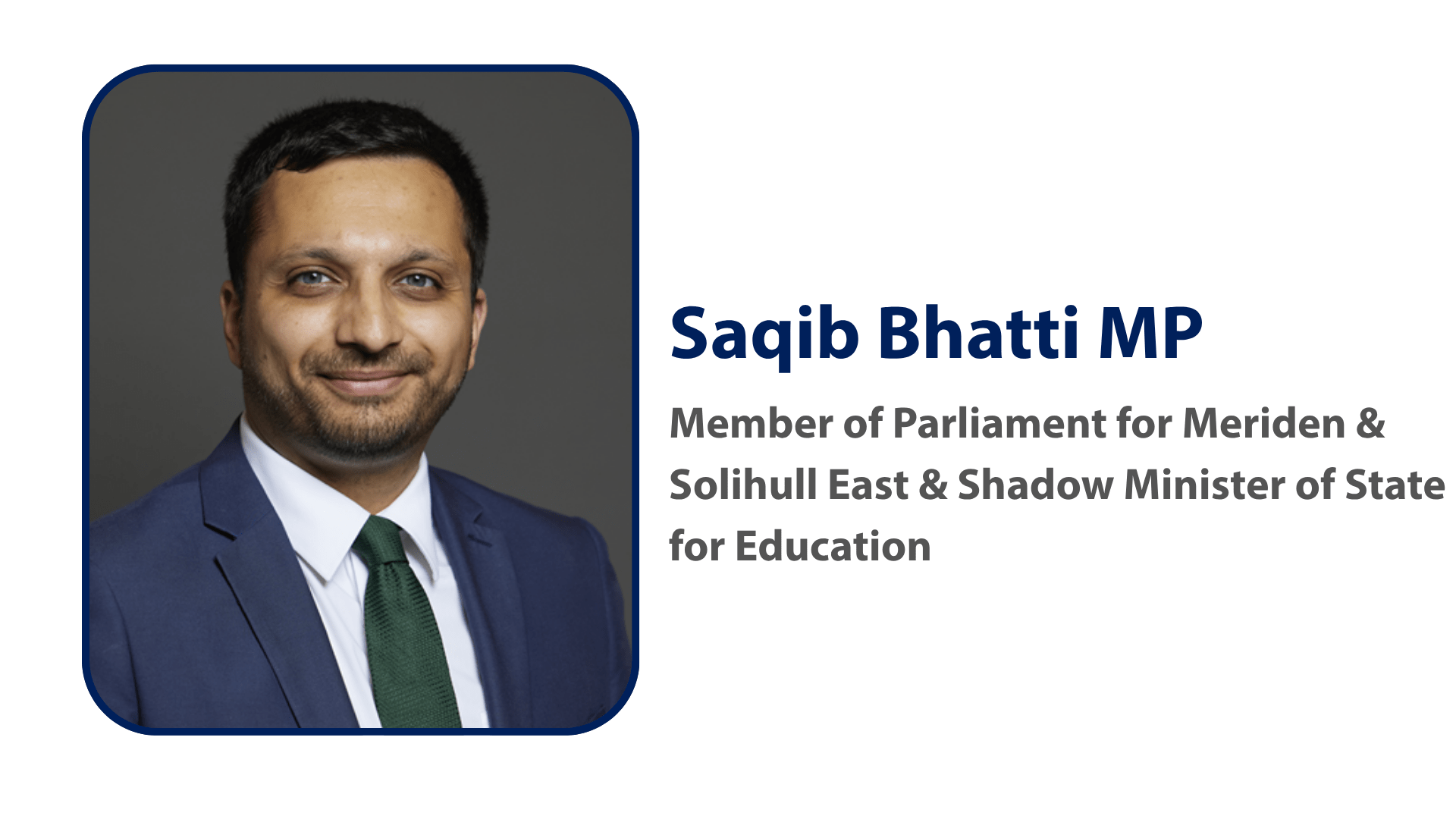
Saqib Bhatti MBE MP has served as Member of Parliament for Meriden and Solihull East since 2019. Under Prime Minister Rishi Sunak, Saqib served as Minister for Tech and the Digital Economy After the 2024 General Election, Saqib has served across numerous Shadow Ministerial roles, including Health and Culture. He is currently Shadow Minister for Education. Prior to being elected, Saqib studied Law at the London School of Economics before qualifying as a Chartered Accountant. During the 2016 EU Referendum, Saqib sat on the Board of Vote Leave.