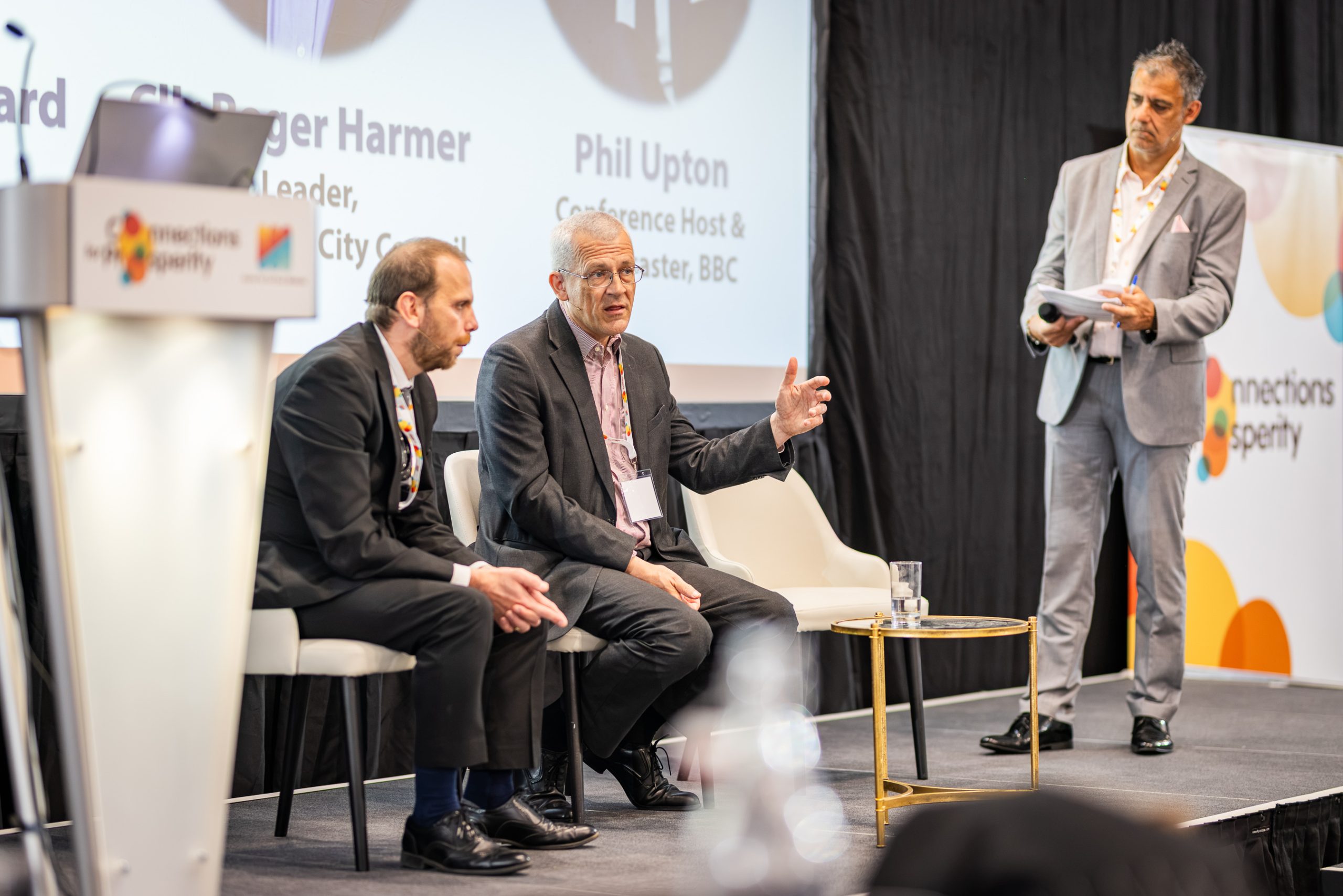
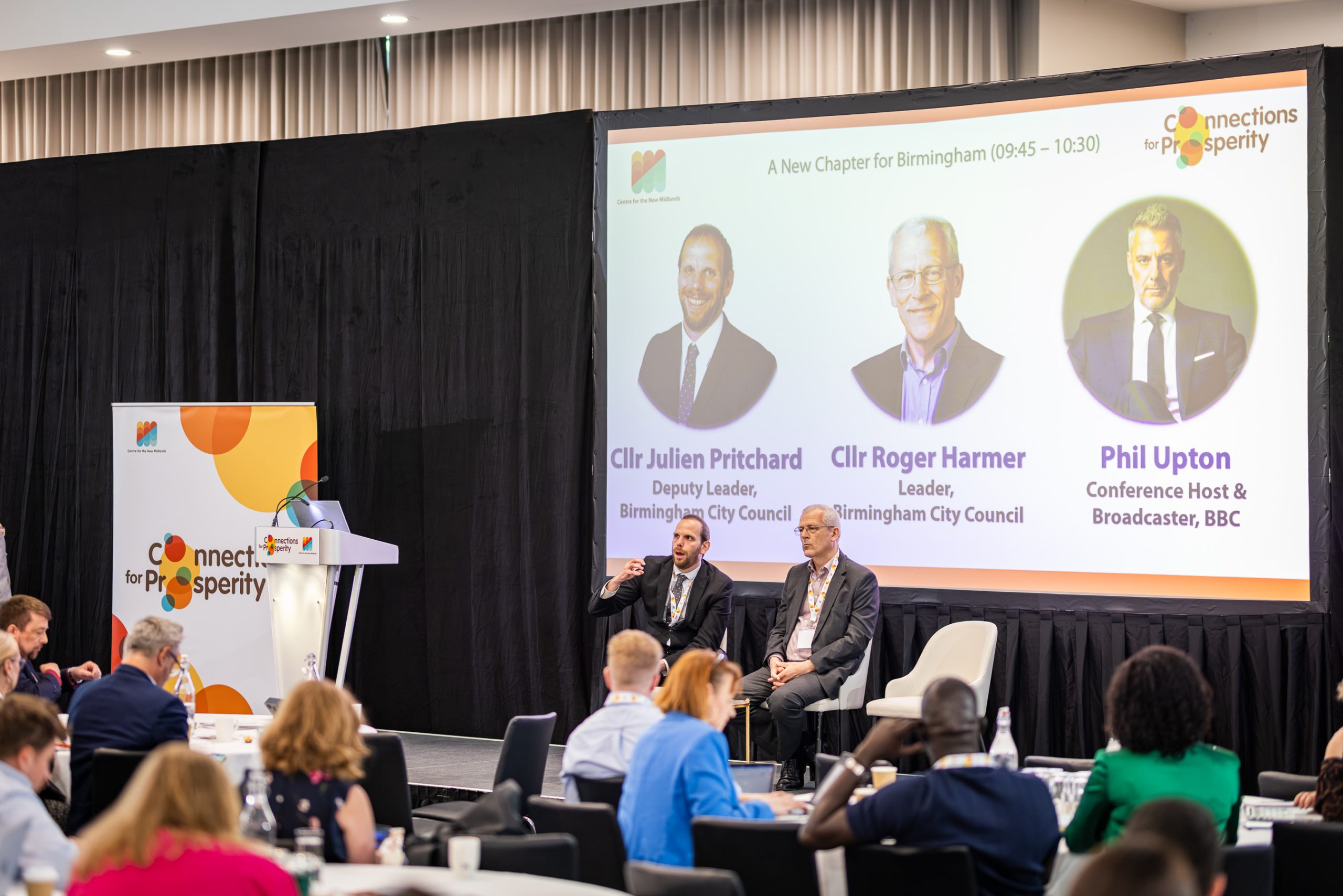
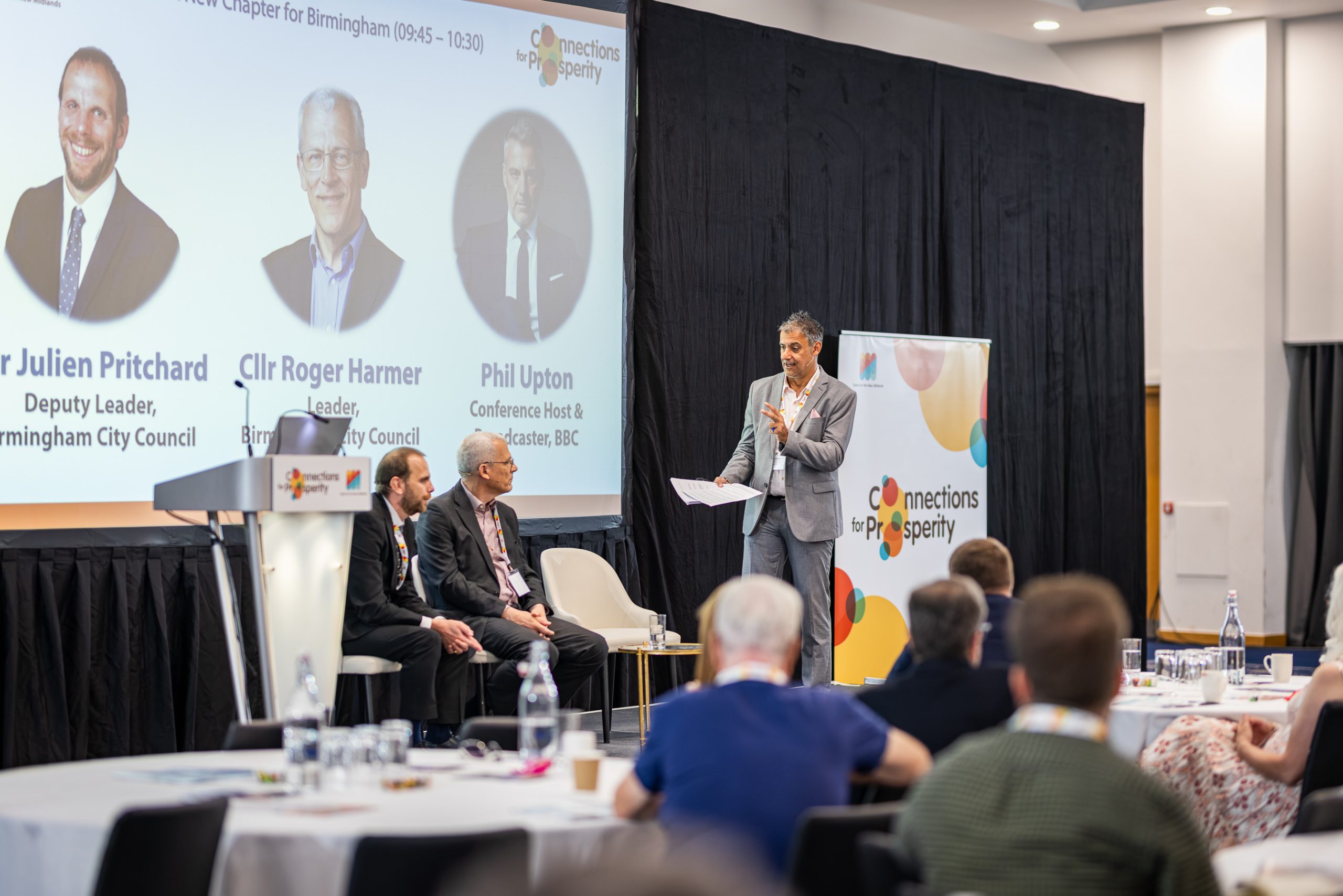
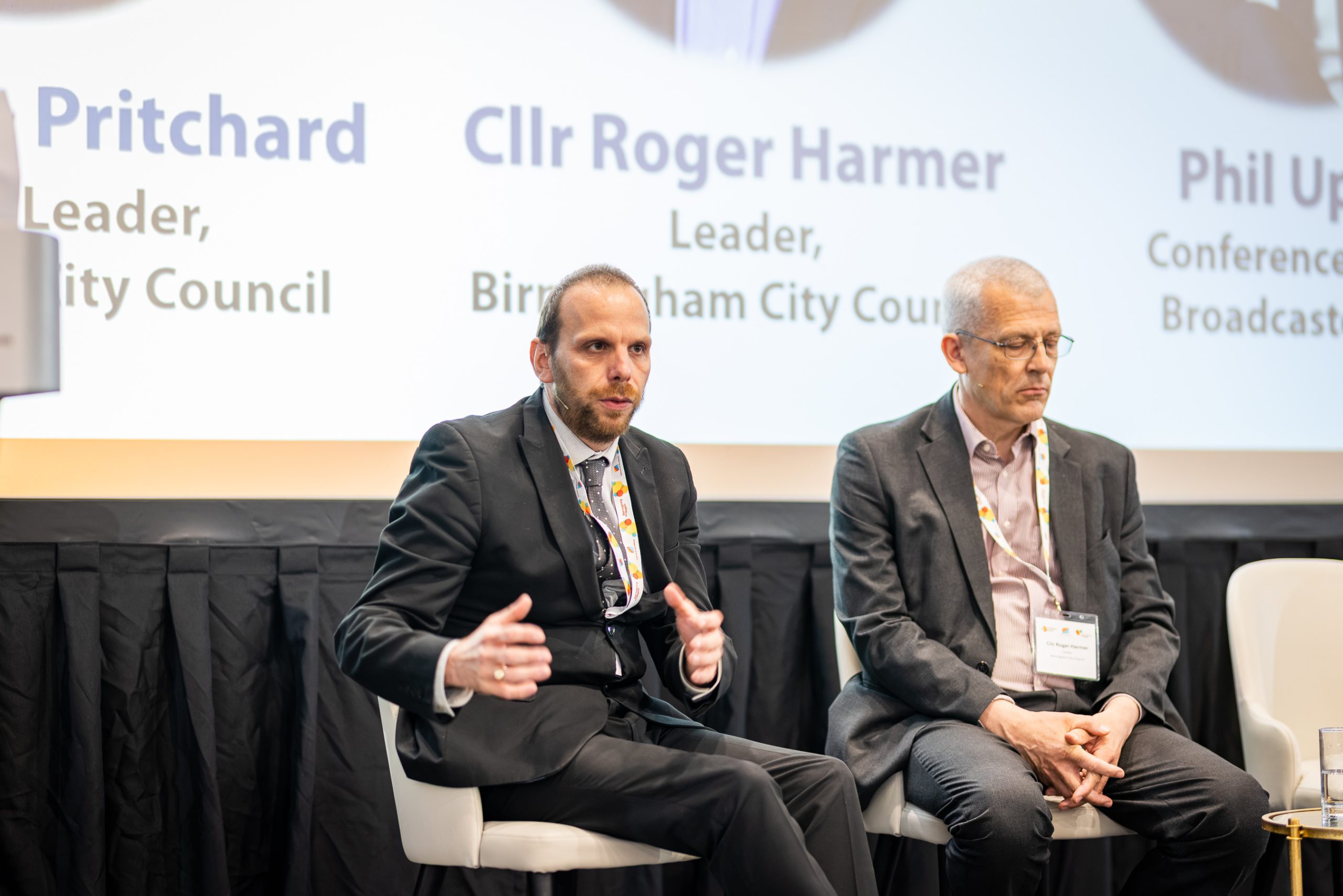
Connections for Prosperity 2026 opened with an engaging interview between Birmingham City Council’s newly elected Leader, Cllr Roger Harmer, and Deputy Leader Cllr Julien Pritchard, hosted by broadcaster Phil Upton.
Against the backdrop of May’s landmark local election result, the conversation explored what the new coalition administration means for Birmingham and how it intends to rebuild trust, restore services and work with partners across the city.
A mandate for change
The discussion began by reflecting on the scale of Birmingham’s election result, described by Phil Upton as a “political earthquake.” Both leaders agreed that residents had sent a clear message: they wanted a different style of leadership, one that is more open, collaborative and responsive to communities.
With many first-time councillors elected and no single party securing overall control, both leaders acknowledged the complexity of forming a coalition administration. However, rather than viewing this as a weakness, they argued that it reflects the diversity of Birmingham itself and presents an opportunity for more constructive, consensus-driven politics.
Collaboration over confrontation
A recurring theme throughout the session was the importance of partnership.
Cllr Pritchard described how the coalition was built on shared values rather than political convenience, highlighting common priorities including:
- investing in neighbourhood services
- protecting libraries, parks and community spaces
- tackling inequality
- delivering genuinely affordable housing
- ensuring that no part of Birmingham is left behind.
Both leaders stressed that collaboration extends beyond politics. They repeatedly emphasised that Birmingham City Council cannot deliver change on its own and must work alongside community organisations, voluntary groups, businesses and anchor institutions to achieve lasting improvements.
Rebuilding confidence in the Council
The conversation also addressed the significant challenges facing Birmingham City Council following its financial difficulties and the loss of public confidence.
Cllr Harmer acknowledged that rebuilding the organisation internally will take time, but argued that improving residents’ everyday experience of council services is equally important. Success, he suggested, will ultimately be judged by whether people feel proud of their neighbourhoods and notice tangible improvements in local services.
For Cllr Pritchard, restoring trust means focusing less on political debate and more on delivering visible outcomes that improve people’s daily lives.
Housing as the defining challenge
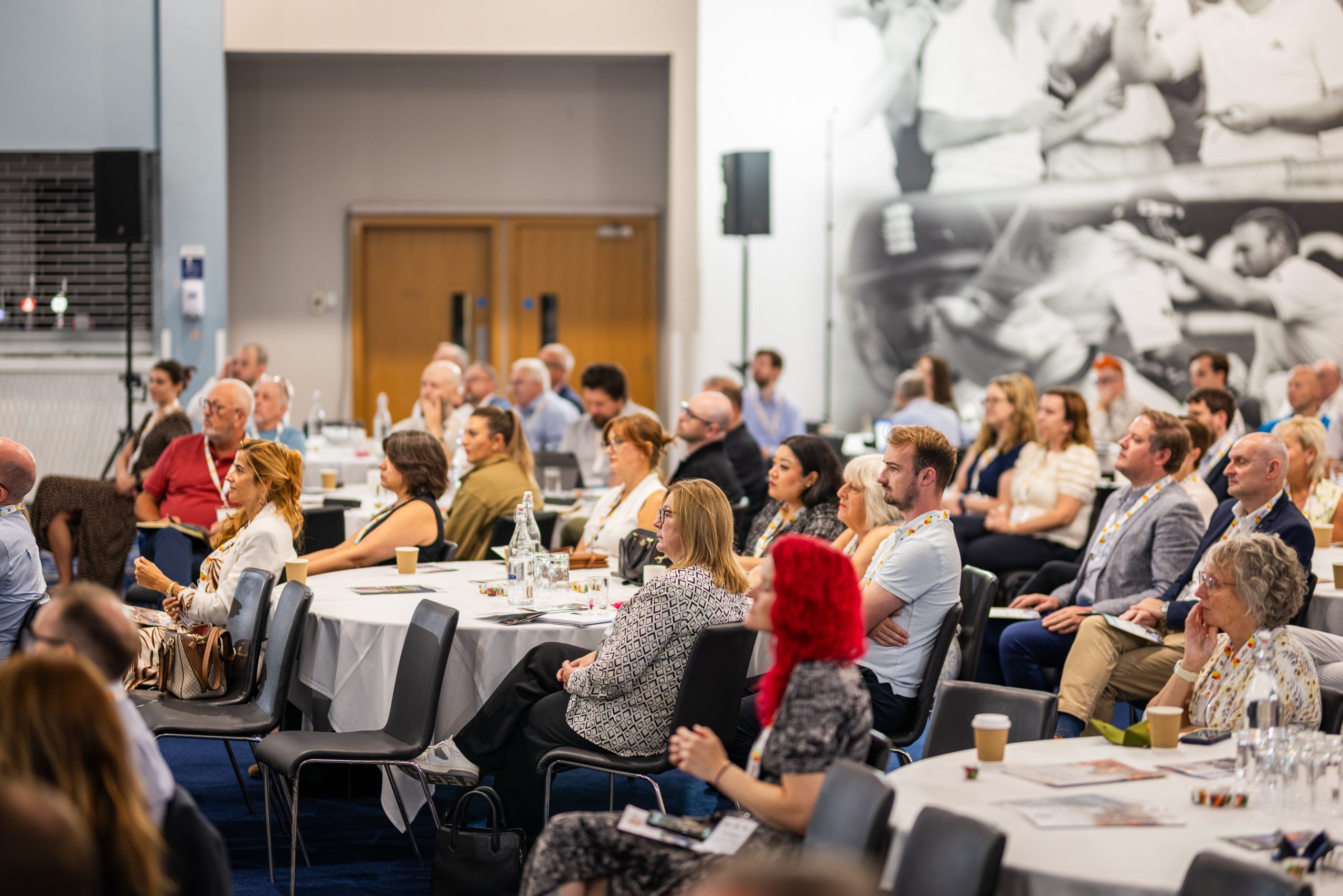
Housing emerged as one of the strongest themes of the session, particularly during questions from the audience.
Both leaders described Birmingham as facing a housing affordability crisis, with growing waiting lists, increasing demand for temporary accommodation and a shortage of genuinely affordable homes.
While recognising that large-scale housebuilding will take time, they committed to increasing the supply of social and affordable housing, improving the quality of existing council housing stock and supporting community-led housing initiatives. They also highlighted the need for stronger regulation of supported housing and called on Government to fully implement legislation that would help councils manage the sector more effectively.
A different role for local government
Responding to questions about innovation and public services, the panel reflected on how councils need to rethink their role.
Rather than attempting to deliver everything directly, Cllr Pritchard suggested that the Council should increasingly act as an enabler—bringing organisations together, supporting community-led initiatives and investing where local organisations are best placed to deliver.
This partnership approach was presented as essential if Birmingham is to tackle complex social and economic challenges despite ongoing financial pressures.
Looking ahead
Asked what success would look like in four years’ time, the leaders painted a vision of a city where:
- neighbourhoods are cleaner, safer and places people feel proud to live
- council services are trusted again
- communities feel listened to
- more affordable homes are being built
- the benefits of growth are shared more fairly across the city.
They also highlighted the importance of major infrastructure projects, improved transport connectivity and investment that enables Birmingham to fulfil its economic potential.
A call to Government
The session concluded with a clear message to national government.
Both leaders called for greater devolution of powers and funding to local government, alongside investment in transport infrastructure and long-term support for affordable housing. They argued that cities like Birmingham are best placed to solve local challenges when given the tools and resources to do so.
An optimistic tone
Despite acknowledging the scale of Birmingham’s financial and organisational challenges, the overall tone of the discussion was optimistic. The leaders consistently returned to the strengths of Birmingham—its communities, organisations, businesses and civic institutions—and argued that the city’s future will be shaped not by the Council alone, but by collective action across the whole city.
The opening plenary therefore set the tone for the conference: one centred on partnership, place-based leadership and the shared responsibility for creating a more prosperous and inclusive Birmingham.
Connections for Prosperity 2026 was sponsored by AtkinsRéalis, E.ON, Unity Trust Bank and West Midlands Housing Association Partnership.
If you and your organisation are not yet members of our Reimagining the Region network, click here to learn more about getting involved.
Our network is growing each and every month – make sure you are part of how we shape an even ‘better’ region for all.
To learn more about getting involved or to join our network, please contact Chris Smith (Founder and CEO, Centre for the New Midlands CIC) by emailing chris@thenewmidlands.org.uk