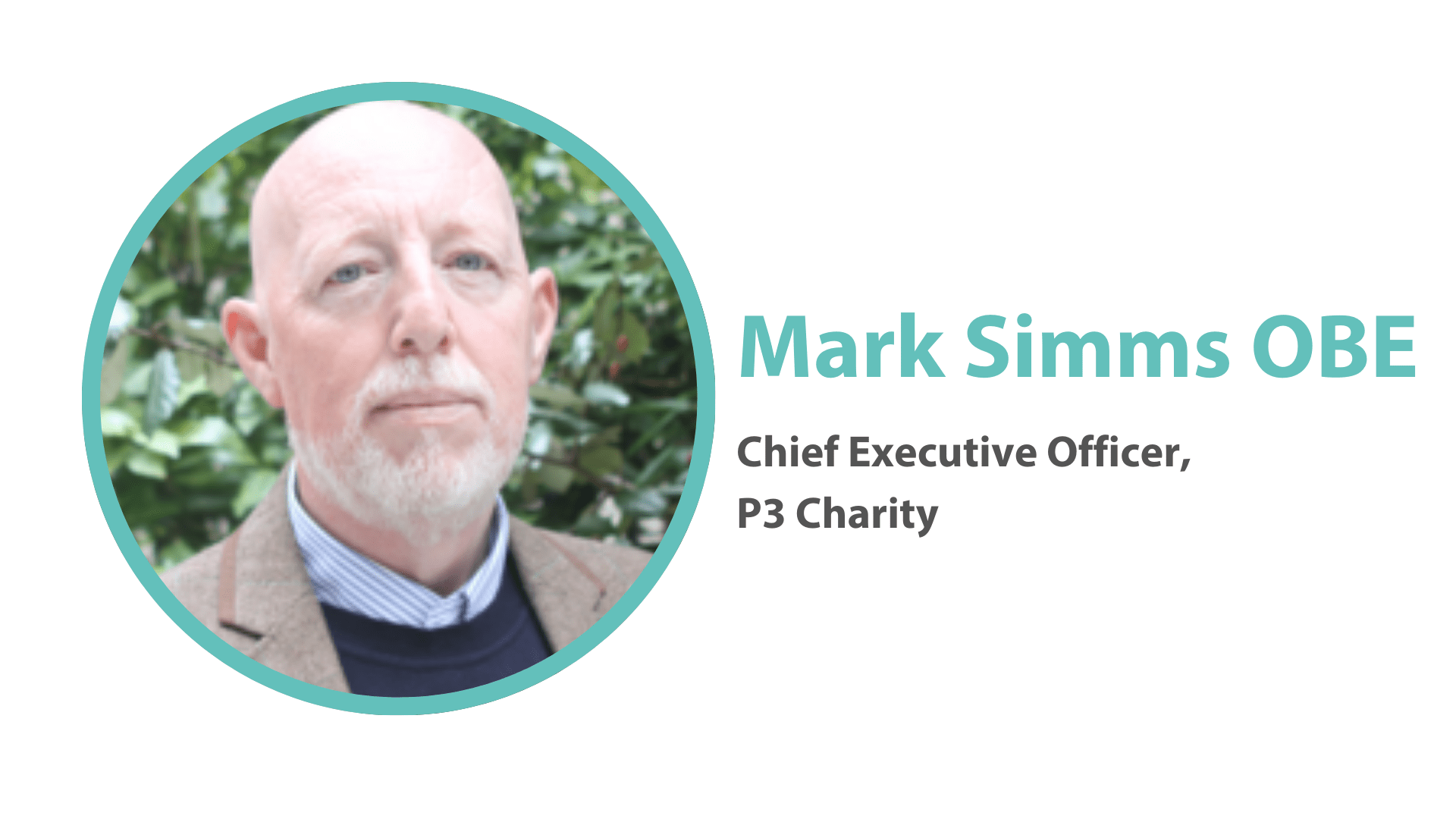
In this article, Mark Simms OBE (Chief Executive, P3 Charity) argues that the Midlands’ rhetoric on fairness and inclusive growth rings hollow unless charities and prime contractors stop bidding for unsustainable public service contracts and take real responsibility for honest pricing and risk-sharing.
Ambition and the Reality of Delivery
The Midlands sees itself as practical grounded and fair. We speak confidently about inclusive growth strong communities and better outcomes for young people and families who rely on public services. We say that prosperity should be shared and that systems should work for those who are most exposed to them. That ambition is genuine and it is one I share yet ambition only carries weight when it is reflected in how we behave especially when money is tight and competition is fierce.
Over recent days I have been reviewing proposed delivery models flowing from prime contractors to partners in a forthcoming Ministry of Justice procurement. Many of the primes involved are charities that have quite rightly criticised government for unrealistic pricing excessive risk transfer and contracts that appear sustainable only if viewed from a distance. It is therefore uncomfortable to see some of the same dynamics reappearing further down the delivery chain with financial pressure and operational risk settling on those least able to absorb them.
There is a quiet assumption that larger charities can stretch a little further add a post or two and somehow make the arithmetic work because they already possess infrastructure such as human resources, finance, safeguarding, governance and digital systems. What is rarely acknowledged is that this infrastructure is not spare capacity waiting to be used – it is a carefully balanced system designed to manage risk assure quality and protect the people we serve. In justice services where scrutiny is intense and the consequences of failure are serious that infrastructure is not a luxury; it is the foundation of safe delivery.
In one proposed model, the resource allocation equates to half of one full time worker covering five local authority areas and a prison. It reads tidily in a bid document yet it bears little resemblance to the lived reality of travel case complexity safeguarding demands and partnership management across multiple geographies. The uncomfortable truth is that there is only a market for the impossible because at some point someone agrees to deliver it.
Commercial Pressure and Organisational Agency
After I posted about this on LinkedIn a number of responses suggested that the real issue lies with the process itself and the financial envelope available rather than with the primes responding to it. I understand that argument because public procurement can be rigid and pricing constraints are often set long before delivery partners see the detail. However, what was largely absent from the discussion was a simple but important point that no organisation is compelled to bid.
We may feel commercial pressure to protect footprint turnover or profile and we may worry about losing presence in a particular part of the Midlands yet those considerations do not remove agency. Choosing to pursue work that does not cover its full cost or that relies on optimistic assumptions about cross subsidy from other contracts remains a strategic decision taken by boards and executive teams.
Across the Midlands there are successful manufacturing firms, professional services companies and technology businesses that compete robustly and innovate constantly. They do not as a matter of routine strategy knowingly price work below cost and then hope to make up the shortfall elsewhere or borrow their way through the gap. Sustainable enterprises are built on disciplined decisions about risk and return not on optimism that something will turn up.
In the voluntary sector we sometimes soften this reality with language about strategic positioning or temporary loss leaders and there are occasions when carefully managed cross subsidy is both legitimate and purposeful. The difficulty arises when this becomes the default model for core public services that carry statutory obligations and safeguarding risk because over time it erodes resilience distorts behaviour and places disproportionate strain on those closest to the front line.
If such models are challenging for established organisations, they are even more so for smaller place rooted charities that embody the Midlands commitment to community and local knowledge. When these organisations are asked to shoulder significant delivery risk, on wafer thin margins, the effects show up in staff burnout turnover and reduced capacity to invest in development and progression. The long term consequence is a narrowing of the ecosystem with fewer diverse providers and less genuine local accountability which sits uneasily alongside our rhetoric about inclusive growth and social value.
Purpose as a Constraint, Not a Slogan
There is also a clear governance dimension. Boards that rightly challenge commissioners about unfair terms and excessive risk transfer must apply the same scrutiny to the structures they create within their own delivery chains. Purpose if it is to mean anything must act as a constraint on commercial behaviour and not merely as a headline in a strategy document or a line in a funding bid.
This is not an indiscriminate criticism of prime contractors because some are demonstrating that a different approach is possible by pricing realistically sharing risk transparently and investing in genuine partnership rather than symbolic alignment. Those are the organisations that understand partnership as a long term relationship grounded in fairness and shared accountability and they are the ones others will actively choose to work with.
If the Midlands wants to lead in building a region defined by integrity opportunity and sustainable growth, then we need honesty about the financial architecture underpinning our public services. Sometimes the most responsible decision a board can take is to decline work that cannot be delivered safely or sustainably even when the headline income is attractive. We are free to bid yet we are equally free not to and that freedom carries responsibility.
If purpose is to be more than branding it must shape how we price how we partner and how we decide which opportunities to pursue. Without that discipline our language about fairness and community risks becoming performance rather than principle and the Midlands deserves better than that.
This is a personal blog post. Any opinions, findings, and conclusion or recommendations expressed in this article are those of the authors and do not necessarily reflect the view of the Centre for the New Midlands or any of our associated organisations/individuals.
ABOUT OUR AUTHOR:
Mark is the Chief Executive of P3 Charity and has more than 25 years’ experience in the Charity sector. Under his leadership, P3 has expanded its services to reach more people in need, providing them with shelter, support, and resources to help them rebuild their lives. Mark joined the Board of the Charity Commission in March 2023 and was appointed as Interim Chair from 25th April to 31st December 2025.
Born in Nottinghamshire, Mark grew up in a family that was actively involved in community work and at an early stage found that they needed the support of homelessness organisations. This early exposure to social issues motivated him to pursue a career in mental health nursing. After graduation, he worked in various roles within the charity sector, including fundraising, project management, and advocacy.
Mark has served for much of his career as a Non-Executive Director or Trustee of many independent charities, large and small.
In recognition of his contributions to P3 and the charity sector, Mark has received numerous awards and accolades throughout his career. He was awarded the OBE for services to Social Enterprise in the King’s birthday honours June 2024.