
There is a quiet asymmetry at the heart of how affordable housing gets built in this country, and the Future Homes Standard, for all its ambition, has yet to reckon with it. A housebuilder’s obligations effectively end at practical completion. A Registered Provider’s begin there — and run for the next thirty years, forty years, sometimes longer. The Standard, as currently framed, is written almost entirely for the first of those parties. It has very little to say to the second.
That matters, because the second is the one left holding the home.
The acquisition reality
Start with how affordable homes actually arrive on RPs’ balance sheets in 2026. A substantial share are not built by the RP at all. They come through Section 106 agreements, package deals, and golden brick acquisitions, where the host developer has already made every meaningful decision about specification, materials, sequencing and installation long before the RP signs anything. The RP inherits the home, the tenant, and the performance risk — but never controlled the inputs that will determine whether any of it works.
Anyone who has sat on the acquiring side of one of these transactions knows the feeling. You are buying, in good faith, a product whose real-world performance you cannot yet verify, from a counterparty whose commercial interest in that performance ends the moment the keys change hands. Under the current FHS framework, there is nothing that meaningfully closes that gap.
The stewardship reality
Now look at the other end of the timeline. Housebuilders, reasonably enough, optimise for handover. That is when they get paid, when defects periods start running down, and when the commercial relationship effectively winds up. RPs are in an entirely different business. They are optimising for the tenant in year twenty-seven — the single parent whose heating bills have to be affordable through a cost-of-living crisis nobody has yet forecast, the elderly resident whose health depends on a home that is still warm, dry and ventilated decades after the ribbon was cut.
The incentives of those two parties are not merely different. They are, at points, directly opposed. And the FHS does almost nothing to align them.
The legal weight of this asymmetry has shifted dramatically in recent years. Awaab’s Law, the strengthened consumer standards, and the wider reckoning with damp and mould have moved the burden of in-use performance firmly onto the long-term owner. Quite rightly, too. But there is a growing mismatch between what RPs are now accountable for and what they were ever in a position to control.
The stewardship gap
Three specific gaps follow from this, and together they are what I would call the stewardship gap in the FHS.
The first is contractual. There is no standardised mechanism for passing FHS obligations cleanly through the S106 and package deal chain. Every acquisition becomes a bespoke negotiation, with warranties cobbled together deal by deal, and the acquiring RP typically holding far less leverage than it needs.
The second is evidential. There is no recognised standard for what an RP should be given at the point of acquisition to prove that the home it is buying actually meets the performance it has been sold as meeting. As-built testing, commissioning records, airtightness results, thermal imaging — all of it exists somewhere, but none of it travels with the home in any reliable, comparable form.
The third is regulatory. The FHS currently has nothing to say about in-use data, and therefore nothing to say about whether a home, five years in, is still delivering what the Standard promised on day one. For a sector whose entire economic model is built on long-term performance, that silence is striking.
Three practical fixes
None of this is insoluble, and none of it requires reopening the FHS from scratch. What it needs is three pieces of practical plumbing.
The first is a sector-wide protocol for standardised FHS warranties and model Section 106 drafting, led jointly by the NHF, Homes England and the HBF. If every RP is negotiating FHS pass-through from a cold start, the transaction cost alone will drag on delivery. A shared drafting standard — proportionate, tested, and endorsed by the bodies that matter — would take most of the friction out of the system and raise the floor for everyone.
The second is a handover performance dossier, mandatory at the point of acquisition. Call it a logbook, call it a passport, the label matters less than the content: as-built fabric testing, commissioning records, a clear account of the systems installed and how they were set up, and a binding commitment to share in-use data for a defined period after completion. The home should carry its evidence with it.
The third is a stewardship role for the Regulator of Social Housing. The Regulator already holds RPs accountable under the consumer standards for the homes their tenants live in. It is a relatively short step to extending that remit into FHS outcomes — not to police housebuilders directly, but to ensure that RPs, and through them their development partners, are held to account for what gets delivered in practice, not merely what was specified on the drawings.
The real test of the Standard
The test of the FHS will not be whether homes comply on the day they are handed over. Compliance on day one is the easy part. The real test is whether those homes are still warm, efficient, healthy and affordable to run in 2055, when the tenant in the front bedroom is somebody we cannot yet picture and the housebuilder who built it is a distant footnote on a title deed.
That is a test only long-term stewards can run, and it is a test the Standard needs to be rewritten with them in mind. The Midlands, with its strong base of mission-led RPs and its deep bench of SME developers, is exceptionally well placed to pilot precisely this kind of stewardship-led approach. We should be given the space to do it — and the regulatory framework to make it count.
Build homes to hand over, by all means. But design the Standard for the people who will own them for life.
This is a personal blog post. Any opinions, findings, and conclusion or recommendations expressed in this article are those of the authors and do not necessarily reflect the view of the Centre for the New Midlands or any of our associated organisations/individuals.
ABOUT OUR AUTHOR:
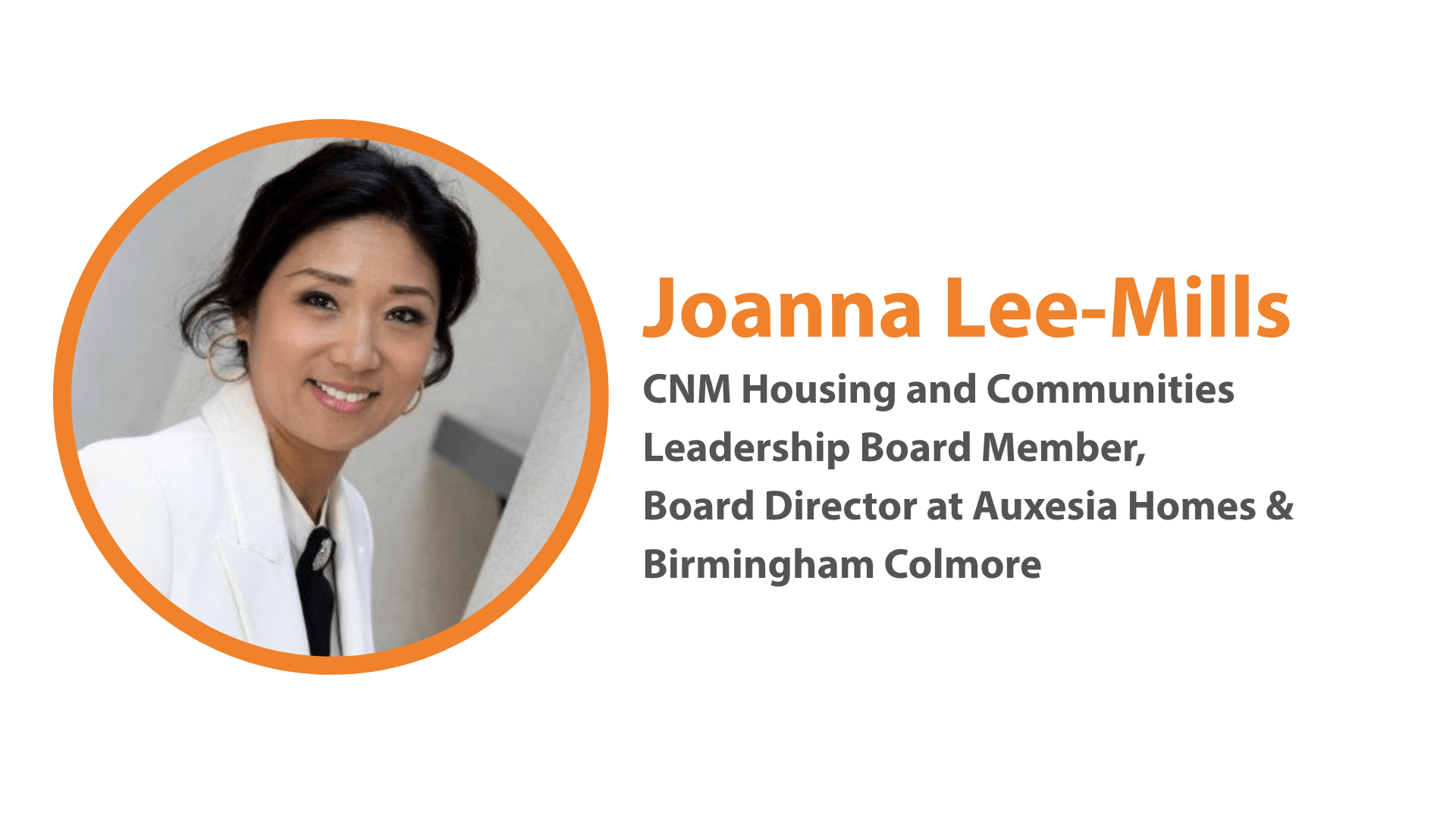
Joanna Lee-Mills is Housing and Communities Board Member at the Centre for the New Midlands, and a Board Director at Birmingham Colmore and Auxesia Homes. She writes here in a personal capacity.