

Anyone who works in development will recognise the stalled site. The land is available and the need is obvious, yet the scheme does not move. On 19 May 2026, at the UKREiiF real estate conference in Leeds, the Mayor of the West Midlands, Richard Parker, launched a fund intended to change that. The Combined Authority describes the West Midlands Futures Fund as a £3.8bn fund aimed at speeding up regeneration, building more affordable homes and creating jobs across the region.
For those of us who work on the delivery of new homes, that ambition is welcome. The harder question is what happens next, because a fund is ultimately measured by the schemes it brings to construction and by who those schemes are built for.
How the Fund is put together
The Fund has been created through a new West Midlands Investment Partnership, which the Mayor set up to bring public investors and government agencies behind a shared plan for growth. The Combined Authority is seeding that partnership with £800m of its own funding. Alongside this sit a £1.1bn commitment from the West Midlands Pension Fund and a pipeline to invest £1.7bn from Homes England, with the National Wealth Fund taking part through a strategic partnership with the Mayor.
Bringing these bodies together is a significant achievement, because each has its own mandate, appetite for risk and lines of accountability. It also means the headline figure needs to be read with care.
The Combined Authority describes the Homes England contribution as a pipeline, which is not the same as money already committed. That distinction matters to anyone planning a scheme around the Fund, and it will matter when the time comes to judge what the Fund has achieved.
Unlocking stalled development
That brings us back to the stalled site. According to the Combined Authority, the Fund gives the region the financial strength to unlock major development sites, back growing industries and attract billions more in private investment. In my experience, sites rarely stall for a single reason. Viability, infrastructure, land assembly and the cost of finance tend to compound one another, and a shortfall in any one of them can hold back an otherwise sound scheme.
Public capital earns its place when it takes on the risks the market will not. That usually means the early and unglamorous work of enabling infrastructure, site assembly and closing a viability gap. The real test for the Fund is whether it is prepared to take that early risk, or whether it drifts towards schemes that would have gone ahead anyway. Additionality is difficult to measure, but it is the right question to keep asking.
Scale brings its own trade-off. A fund designed to unlock major sites will naturally favour large and complex schemes. Smaller sites, and many of the housing associations and local builders that bring them forward, will need a clear route to support as well, whether through the Fund or alongside it.
Regeneration and place
If unlocking sites is the mechanism, regeneration is the purpose. The Combined Authority has said the Fund will support projects across four growth locations, namely the Birmingham-North Solihull Gateway, the Coventry Growth Arc, the Sandwell-Dudley Metro Corridor and the Wolverhampton-Walsall Growth Cluster. Together these represent a £19bn pipeline of investment opportunities set out in the West Midlands Investment Prospectus. Among the largest is the £4bn Sports Quarter in Birmingham, which includes a new stadium for Birmingham City FC. Several Birmingham schemes will also benefit from a new Mayoral Development Corporation, which the Combined Authority describes as the biggest and most ambitious of its kind in the UK.
Funding alone will not deliver these places. Schemes will still need planning permission, a viable financial structure and partners with the capacity to build. Regeneration is also about more than the schemes themselves. It is about whether the people who already live in these neighbourhoods can afford to stay, and whether they share in the jobs and homes that follow. The value of the Fund will be seen in starts on site and in what those developments leave behind for the communities around them.
The affordable housing question
Nowhere will that be felt more keenly than in affordable housing, and here there is real progress to build on. The Mayor has set a target for the region to be building 2,000 social rent homes a year by 2028. In August 2026, the Combined Authority announced the release of the first £400m from the region’s £1.7bn Social and Affordable Homes Programme, which runs until March 2035 and is expected to deliver at least 10,000 affordable homes over the decade. That funding will contribute towards the Futures Fund. The Combined Authority also reports that, of 7,237 homes contracted in the last year, 2,452 were affordable, including 1,086 for social rent.
Contracted homes are not completed homes. The distance between the two is where much of my own work has taken place, in the agreements, partnerships and acquisitions that turn a funding commitment into a home that a family can move into.
The central question for the Futures Fund is how its wider ambitions will sit alongside the region’s social rent target. Social rent homes, by their nature, produce lower and slower returns than commercial or market development. A fund that draws on pension capital will face understandable pressure to favour schemes that pay back, because that money is invested on behalf of the Pension Fund’s members. That is a reason to be deliberate about which parts of the Fund support social rent, so that it is carried by the capital that can accept a lower return.
From what I have seen, affordable housing on large mixed-use schemes is often among the first elements to come under pressure when costs rise. If the Fund is to support inclusive growth, the affordable and social rent contribution of each scheme should be settled early, as part of the case for investment.
Leadership and governance
All of this depends on a partnership holding together over many years. In March 2026, the West Midlands Pension Fund said it aims to allocate up to £1.1bn to investments within the region over the next six to eight years, with the Combined Authority identifying and shaping opportunities aligned with the Growth Plan.
A partnership of this kind will inevitably face moments when its members want different things. One partner will prioritise financial return, another housing numbers, another jobs or infrastructure. Leadership here means agreeing in advance how those choices will be made, who makes them and how they will be explained. It also means holding every partner to a shared definition of success.
That definition will only hold if delivery partners are involved from the start. Housing associations, councils and developers should be brought into the conversation whilst schemes are still being shaped, so that their experience of what can actually be built informs what is funded. The capacity of those partners, and of local planning teams, deserves as much attention as the capital itself.
Three recommendations
With that in mind, I would put three recommendations to the Combined Authority and its partners.
- Firstly, report clearly and regularly. Money committed should be shown separately from money in the pipeline, and homes should be reported scheme by scheme as funded, started and completed, broken down between social rent, other affordable tenures and market housing.
- Secondly, make the affordable and social rent contribution part of the earliest assessment of every residential and mixed-use scheme, and be explicit about which parts of the Fund will support it.
- Thirdly, publish investment and outcomes across all seven local authority areas and the four growth locations, so that residents can see whether growth is reaching their communities.
None of these recommendations requires new money. Each would strengthen confidence in the Fund among investors, partners and residents alike.
Conclusion
The West Midlands Futures Fund brings public, pension and national investment together behind a shared plan for growth, and that is a considerable step for the region. Its success will be judged on stalled sites brought forward, on places that are visibly improved, and on households moving into secure and affordable homes. Those are the measures against which the Fund, and all of us involved in delivering it, should expect to be held. If the Fund succeeds, the stalled site will become the exception in the West Midlands, and no longer the familiar story.
About the author
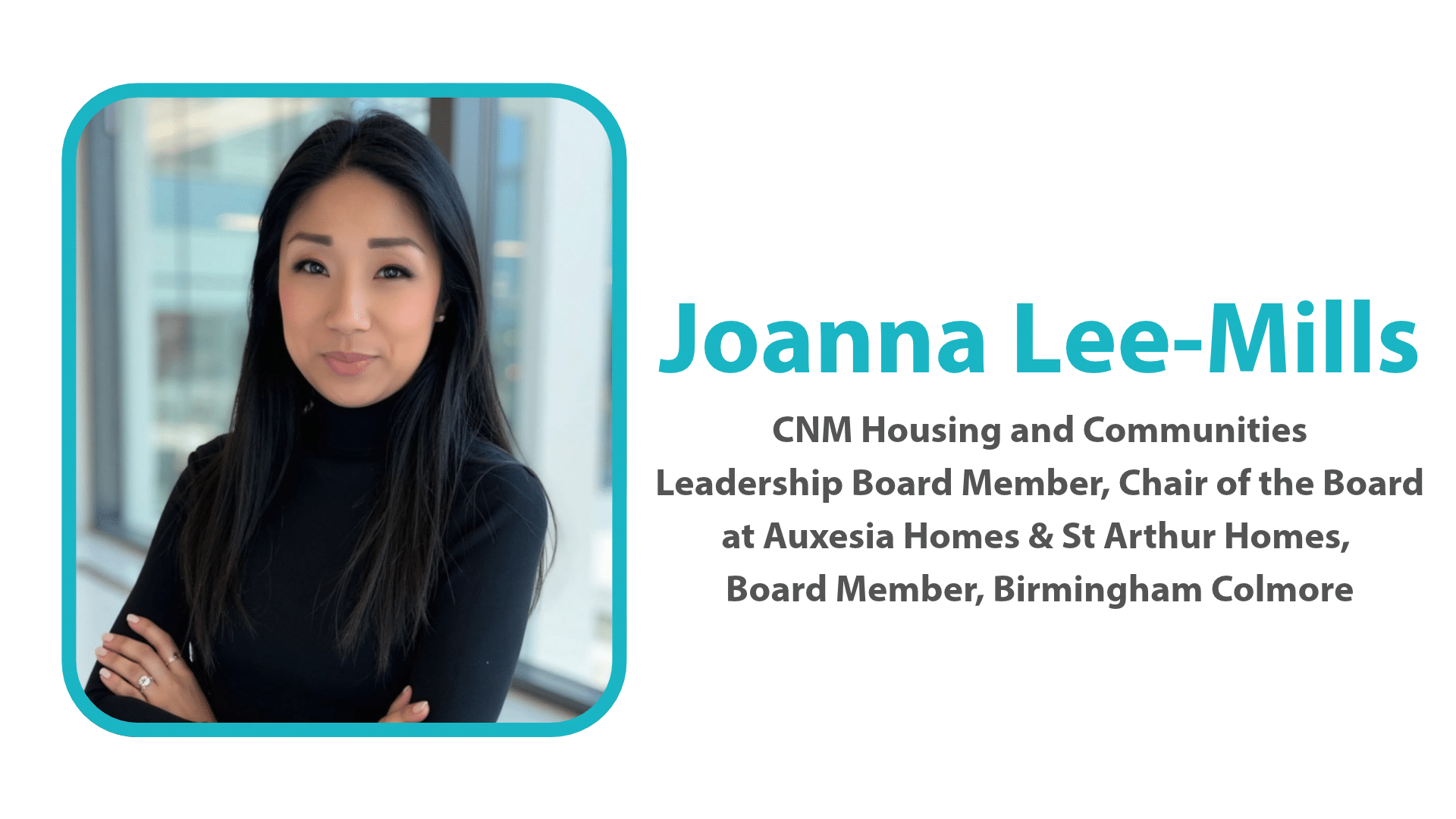
Joanna Lee-Mills is a CNM Housing and Communities Leadership Board Member and Chair of the Board at Auxesia Homes and St Arthur Homes. She writes here in a personal capacity.
This is a personal blog post. Any opinions, findings, and conclusion or recommendations expressed in this article are those of the authors and do not necessarily reflect the view of the Centre for the New Midlands or any of our associated organisations/individuals.
ABOUT OUR AUTHOR:
Joanna Lee-Mills is a CNM Housing and Communities Leadership Board Member, Chair of the Board at Auxesia Homes & St Arthur Homes, Board Member at Birmingham Colmore. She writes here in a personal capacity.