The West Midlands Combined Authority Theory of Growth identifies business leadership and management as a distinctive regional challenge and links management quality with the region’s productivity gap. The evidence it gathers is striking. The wider region has the lowest business management scores in England, and they have fallen since 2020. One study it cites attributes 30% of the Midlands’ productivity gap with international competitors to weaker management competencies.
The report also points to a problem of supply. Between April 2021 and April 2023, almost twice as many managerial roles were advertised in the region as there were available CVs with management skills.
That matters because the region is home to many SMEs and growing businesses, who often struggle to convert early success into the growth their potential deserves and establish a truly national or international presence.
Many growing companies reach a stage of development where they take on the complexity of a much larger organisation, without yet having the management infrastructure you would associate with one. They may be expanding internationally, employing more people, taking on investment, entering larger contracts or facing more regulation – but a permanent General Counsel, Finance Director, People Director, or CTO can still look like an expense the business cannot yet justify.
A growing business can obviously buy in expertise externally through their trusted accountants, HR consultants, solicitors and tech advisers. That support is valuable and often vital. But an external adviser is usually instructed to answer a particular question, with a limited visibility of the wider business and without owning the commercial decision which follows. They will answer the questions they are given – often the harder job is knowing which questions need asking at all.
An embedded senior professional has a different function: What is the business actually trying to achieve? What is stopping us? Which risks matter? How do we get this done?
I have spent more than 20 years working as a lawyer – the vast majority of it in-house – and I now work as a fractional General Counsel – so I have an interest in this argument. But the case rests on the region’s own evidence rather than mine. What my experience does show is that the biggest difference between external advice and effective in-house leadership is not usually the quality of the legal analysis; but the perspective from which the question is answered.
Businesses often approach legal in particular, expecting to be told that they cannot do something. The best kind of in-house lawyer should usually be able to say “Yes, we can – but this is how we need to do it”. This comes from being close enough to the commercial objective, risk appetite, people and history to be able to tell the difference between a genuine red line and a risk which is manageable.
In a previous role, I was responsible for legal support across 23 countries. Despite a sustained period of growth and expansion, we were able to radically reduce our external legal spend by more than 70% over 5 years. The job couldn’t possibly have been done by obtaining exhaustive legal advice on everything. Part of the value was in deciding when specialist advice was actually necessary, what mattered and what the business could sensibly proceed with on its own judgement.
All of this matters for growth because the Theory of Growth doesn’t just identify weak leadership capability, it links this with innovation. It notes that only 35% of West Midlands businesses were innovation-active in 2020-22, one of the lowest proportions of any UK region. The report links this to leadership – leaders set the culture of continuous improvement, judge the return on intangible investment and build the collaboration that innovation depends on. It also notes that external capacity can help smaller firms find partners, navigate intellectual property and structure collaborations effectively – a lot of which is in practice legal work.
Businesses don’t necessarily just need more professional advice: they sometimes need experienced people alongside their existing leadership who can help turn advice into decisions. This is relevant to AI adoption, expansion into new markets, regulatory change, and many other areas. At its best, this kind of support is not an overhead – it removes barriers to a business’s growth.
Historically the choice was binary – either hire a senior person permanently (with all of the time investment and uncertainty recruiting a new, senior individual into a business can bring); or buy external advice from traditional sources. Both could help solve the problem; but both were an expensive step to take, so often the decision was postponed.
Fractional or portfolio models create a third possibility. A business can access someone (often at short notice), who behaves more like a member of its own leadership team – learns the business, develops relationships, understands its appetite for risk, spots problems before they become instructions – without initially needing a five day a week permanent role.
This is not only theoretical. Taylor Root’s recent Global In-house Legal Market Report identifies increased use of fractional and interim legal talent in a number of markets, providing businesses with rapid access to expertise, while aligning support and business need. While the report referred to legal, this same principle equally applies to finance, people, technology, risk and other specialist members of the senior management team.
The WMCA report also identifies a “brain drain” problem – people who graduate in the West Midlands are less likely to stay there, and the report links this statistic to creating opportunity. The report relates to graduates, but the same logic applies to those further along in their career. There is a potentially a two-sided opportunity here: growing Midlands businesses gain access to senior people earlier; experienced Midlands professionals gain more ways to deploy their expertise without having to work for the region’s relatively small number of very large employers or gravitate towards London or beyond.
If improving leadership and management capability is important to the West Midlands’ growth, the question shouldn’t only be how we train tomorrow’s leaders. We should also ask how growing businesses can gain better access to the experienced leaders we already have.
Not every growing company needs a full-time General Counsel, Finance Director, People Director or CTO. But that doesn’t necessarily mean it doesn’t yet need what those people can bring.
None of this removes the need to develop the leadership capability already within growing businesses. Fractional expertise cannot substitute for strong founders and managers, nor should it. Its value may instead lie in complementing them: bringing experience of problems a business is encountering for the first time, while transferring some of that knowledge into the organisation rather than simply supplying an answer from outside.
Fractional leadership will not be right for every business or every role. But for companies caught between buying advice one problem at a time and building a full senior leadership team, it may prove to be an important part of the solution.
This is a personal blog post. Any opinions, findings, and conclusion or recommendations expressed in this article are those of the authors and do not necessarily reflect the view of the Centre for the New Midlands or any of our associated organisations/individuals.
ABOUT OUR AUTHOR:
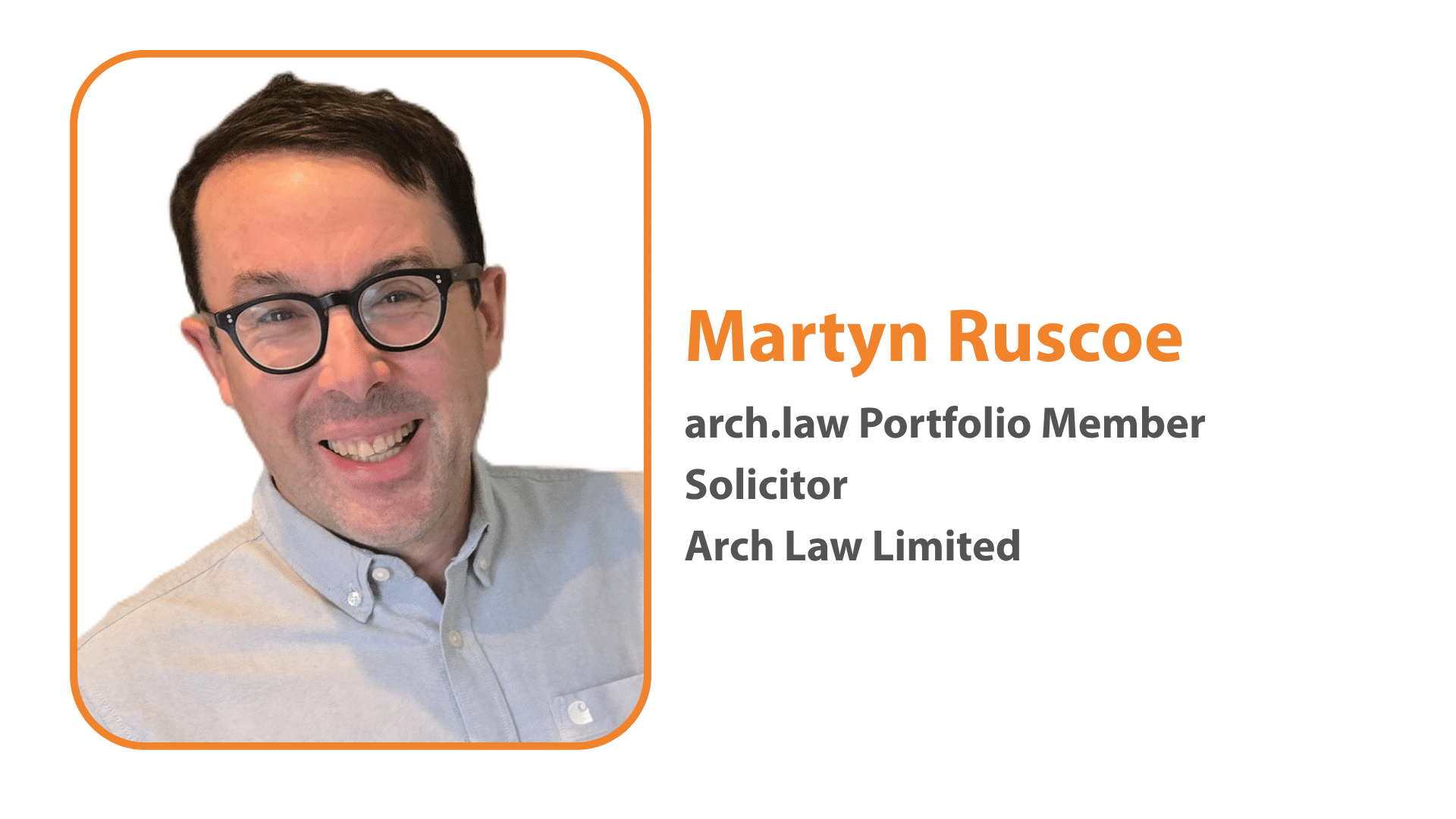
Martyn Ruscoe is a fractional General Counsel with arch.law and a dual qualified solicitor in England & Wales and Ireland. He has more than 20 years’ legal experience, predominantly in-house, and most recently led legal and governance support across 23 European countries for a multinational business. He now works with businesses on a fractional and project basis, helping them to manage legal risk, improve their legal functions and get better value from their legal teams and advisers. He is based in Shropshire.