In the last few months, a set of national and regional reports and announcements have highlighted the challenges and opportunities relating to employability and skills within the West Midlands.
Ours is a region of extraordinary potential. It has the youngest population of any region outside London, growing strengths in advanced manufacturing, health innovation, digital technology and clean growth, and increasing control over employment and skills policy through devolution. Yet it also faces some of the UK’s deepest labour market challenges, including the lowest employment rate (69.1% compared to national rate of 75.45%), the highest unemployment rate (7.5% compared to a national average of 4.9%) and one of the highest levels of economic inactivity among combined authorities (25.1%).
The question facing regional leaders is no longer simply how to create jobs. It is how to ensure that more people can access, sustain and progress in work. The answer lies in understanding the interconnected challenges of young people, older workers and place.
The Young People’s Challenge
One of our region’s greatest assets is its youthful population, but it is clear that many young people are finding it increasingly difficult to gain a foothold in the labour market.
The evidence set out in The Rigby Foundation’s Inspiring Futures report and the Milburn Review’s Young People and Work report describes a “perfect storm” of pressures facing the current generation. Young people in the Combined Authority area are more likely than their national peers to claim benefits and experience economic inactivity.
Both the Milburn Review and the Rigby Foundation’s Inspiring Futures report highlight the structural problems underlying these figures. Entry-level jobs have declined sharply, particularly in sectors such as retail, hospitality and administration that have traditionally provided young people’s first experience of work. The reports also highlight the decline of the Saturday job, reductions in work experience opportunities and apprenticeship pathways that have increasingly shifted away from younger entrants.
The result is a Catch-22. Employers frequently report concerns about work readiness, confidence and workplace experience, while young people report difficulty accessing opportunities that would help them develop those attributes.
We must create opportunities for young people to connect with the world of work, to build confidence, to learn workplace behaviours, and to get real world experience. This will require a huge effort to build relationships with a vast number of businesses. Only then can we create the opportunities for high-quality work experience required.
Our young people do not lack ambition. The overwhelming majority want employment, education or training. The challenge is not motivation but opportunity.
The Older Workforce Challenge
While much attention focuses on young people, a second challenge is emerging.
The West Midlands workforce is ageing. In authorities such as Solihull and Dudley, approximately one-third of the working-age population is already aged between 50 and 64. At the same time, unemployment among over-50s remains above the regional average in Birmingham, Wolverhampton and Sandwell.
Future economic growth will increasingly depend on retaining and supporting experienced workers. Employers facing skills shortages cannot rely solely on new labour market entrants. They also need to help older workers remain economically active, adapt to technological change and manage health-related barriers to employment.
The challenge facing the West Midlands is therefore not simply one of youth employment. It is a participation challenge spanning the whole working-age population.
Place as a Multiplier
The Milburn Review describes place as a “multiplier” of opportunity and disadvantage. Young people facing similar circumstances can experience very different outcomes depending on where they live. Local labour market conditions, transport connectivity, educational attainment, health inequalities and social capital all shape employment prospects.
This pattern is clearly visible across the West Midlands.
Employment rates in Dudley and Solihull exceed 75%, while Birmingham, Wolverhampton and Sandwell lag significantly behind. Economic inactivity is particularly high in areas such as Walsall, Birmingham and Wolverhampton. Within local authority areas, some neighbourhoods experience concentrations of unemployment, poor health and lower educational attainment that extend across generations.
The reports therefore argue for a stronger place-based approach. Solutions must be rooted in local communities, local employers and local labour markets rather than relying solely on national programmes. To this end the DWP WMCA Place Based Plan is to be welcomed.
The Skills Mismatch
In a world of headlines and click bait, it is important to recognise that the region’s difficulties do not all stem from a lack of vacancies. In June 2026 the DWP reported that there were 39 621 vacancies across the Combined Authority area.
The WMCA analysis identifies persistent demand across engineering, manufacturing, construction, logistics, health and digital occupations. Yet local skills provision often remains poorly aligned to employer needs. Across multiple local authorities, reviews highlight an over-reliance on lower-level provision, insufficient Level 3 and above qualifications, and too few learners progressing into sectors where vacancies are greatest.
At the same time, the labour market is changing rapidly. Inspiring Futures highlights growing demand for digital skills, AI literacy, communication skills, problem-solving and adaptability. The challenge is no longer simply helping people acquire qualifications but helping them develop the capabilities needed for an increasingly technological and fast-changing economy.
A New Direction for Technical Education
This context makes Prime Minister Andy Burnham’s recent announcement on technical education particularly significant.
Burnham has proposed new technical pathways from age 14, enabling students to combine core academic subjects with technical learning, work experience and employer engagement linked to opportunities in their local economy. The reforms are intended to place technical education on an equal footing with traditional academic routes and create clearer pathways into employment.
His argument speaks directly to many of the challenges highlighted: for too long, educational success has been defined primarily through academic progression, while technical routes have often been treated as secondary options. The proposed reforms seek to create parity between academic and technical education and strengthen the connection between schools and labour markets.
For the West Midlands, this could be transformative. The region’s economic future depends heavily on sectors such as advanced manufacturing, digital technology, health, engineering and clean growth. These sectors require technical capability as much as academic achievement. Aligning education more closely with regional economic opportunity could help address skills shortages while creating clearer pathways for young people into rewarding careers.
Conclusion
The evidence from the recent reports points to a simple conclusion: the West Midlands does not suffer from a shortage of talent or ambition.
It suffers from a shortage of connections.
Connections between education and employment. Connections between skills provision and employer demand. Connections between young people and opportunity. Connections between communities and economic growth.
The region’s future prosperity will depend on strengthening those connections. If the West Midlands can successfully combine its place-based approach, devolved powers, employer engagement and emerging technical education reforms, it has an opportunity not only to create a labour market that works for people of all ages, in all parts of the region.
In the coming months, the Centre’s Employability and Skills Board will be seeking to build on these insights. If your organisation would be interested in convening a group of thinkers on this topic or sponsoring future events please contact the Centre for more details.
This is a personal blog post. Any opinions, findings, and conclusion or recommendations expressed in this article are those of the authors and do not necessarily reflect the view of the Centre for the New Midlands or any of our associated organisations/individuals.
ABOUT OUR AUTHOR:
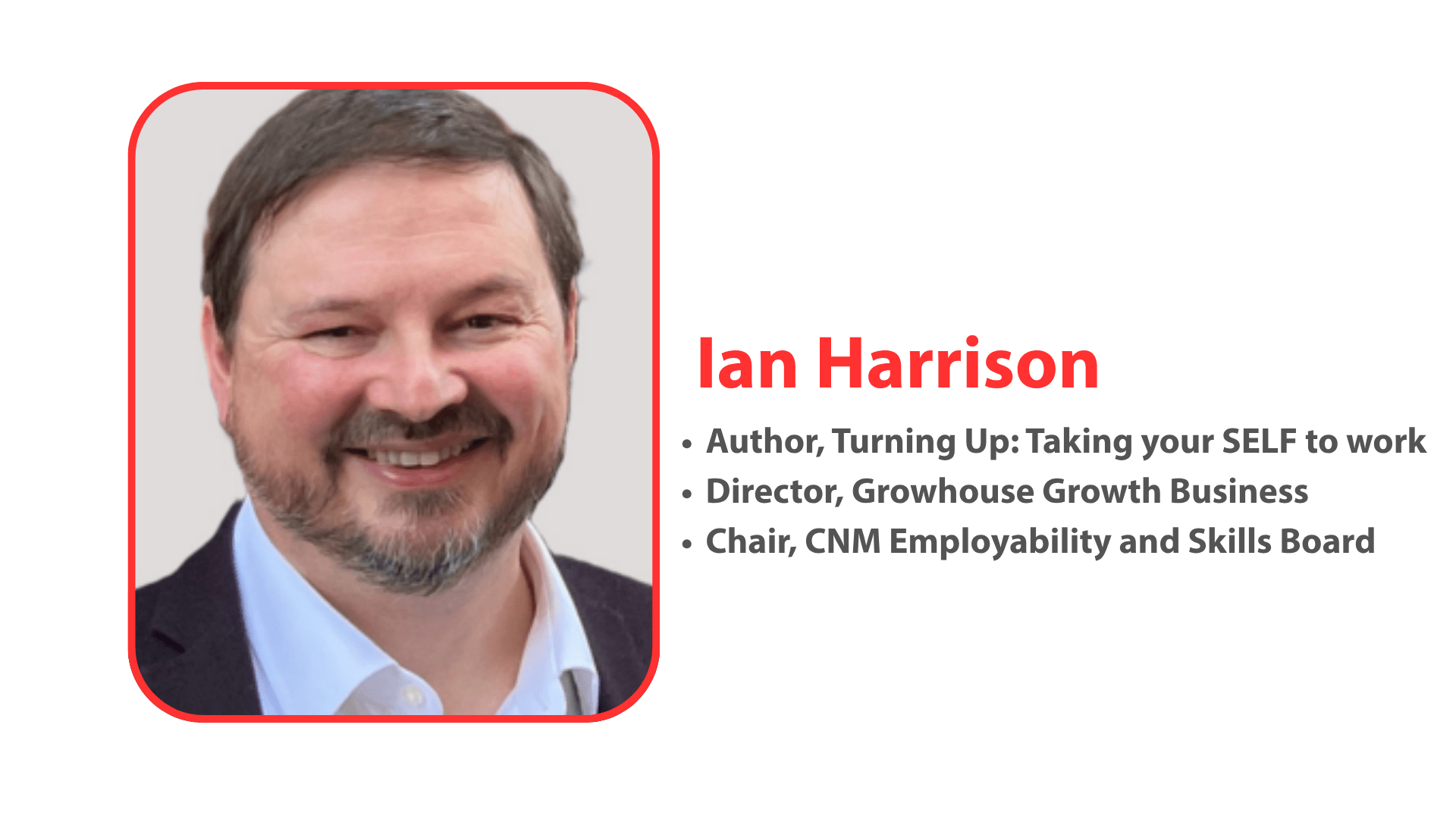
Ian partners with business leaders to build healthy workplace communities where people feel seen, safe and significant – turning up as themselves to drive performance, belonging and wellbeing.
He believes that turning up is a choice to connect, contribute, and create meaningful change. Whether through coaching, writing, or workshops, Ian invites others to turn up, be the difference, and shape workplaces that are both human and high-performing.
A longstanding client once described Ian’s approach as walking with them through the landscape, helping them to unpick their thoughts and opening new doors to other interesting places.
A proud Lancastrian Ian has spent his entire adult life living in and around the West Midlands. Having grown up in Blackburn, he is a life-long Blackburn Rovers fan and you’ll often find him in the Riverside Stand at Ewood Park. He is a proud father and grandfather.