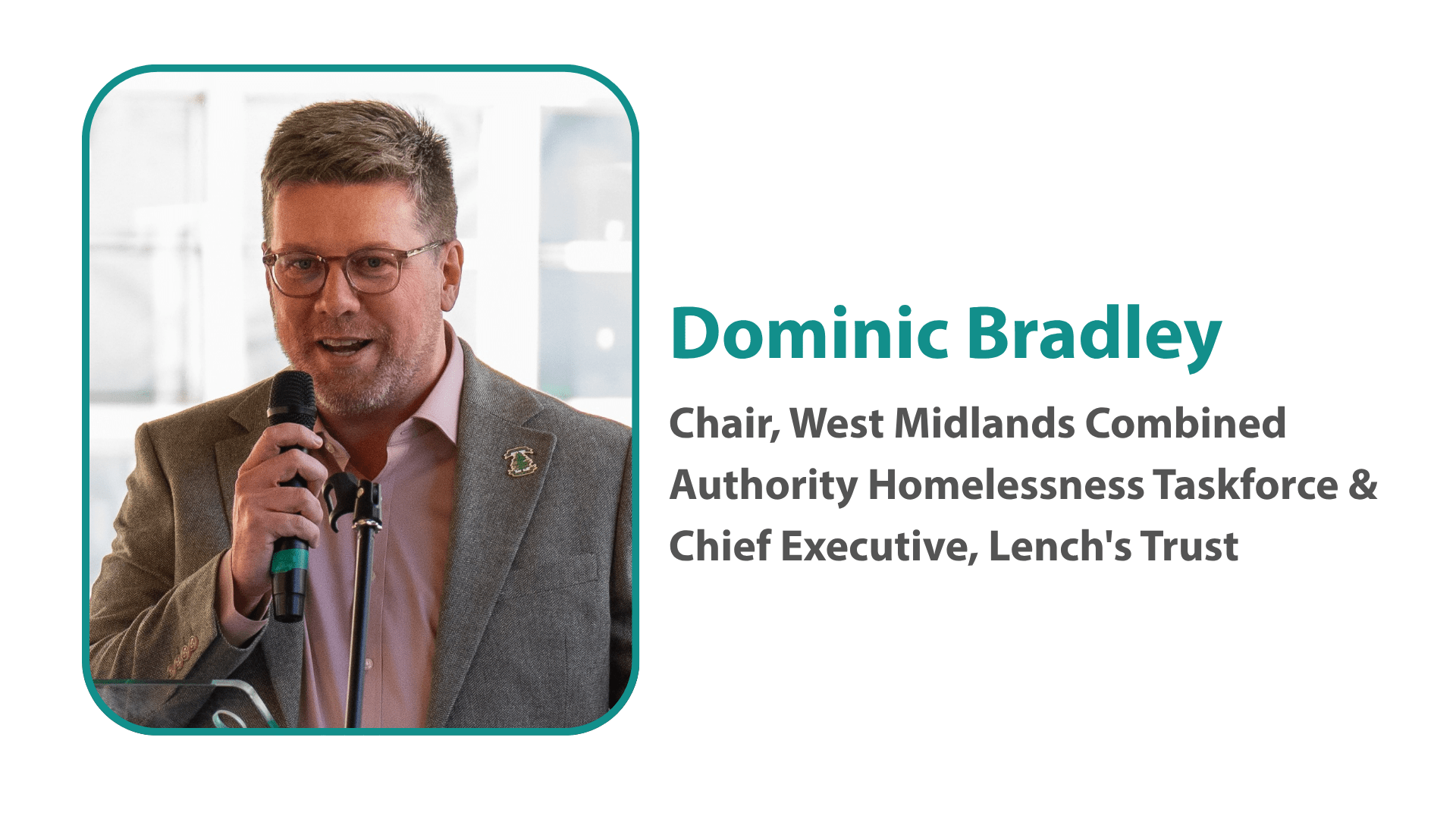


This article, authored by Dominic Bradley (CEO, Lench’s Trust and Member of CNM’s Housing and Communities Leadershp Board) traces social housing back to its almshouse origins to argue that the sector’s future may depend on rediscovering its past.
From Tudor England to today’s housing and ageing crises, Dominic highlights how almshouses pioneered dignity, community and wellbeing long before the welfare state—while also confronting their harsher legacies of control and exclusion. Using fresh historical research alongside modern examples, the piece challenges current practices around affordability, ageing and loneliness, and makes the case that almshouses’ long tradition of adaptation, from gardens and shared space to eco-homes and intergenerational living, still has powerful lessons for housing professionals today.
Social housing’s almshouse roots and centuries of experience have much to teach today’s professionals and practice.
I say it often to emphasis our history but Henry VIII was King when my organisation began providing homes for ‘women in the greatest want’ back in 1525. The country’s population was a mere 2.5 million, and Birmingham was just a small market town.
Last month – 500 years on – Appleby Blue Almshouse in Bermondsey, south London scooped the RIBA Stirling Prize. The judges praised its focus on combating loneliness and ‘hopeful and imaginative response’ to ‘set an ambitious standard for social housing among older people.’
So what’s to learn from these distant and disparate times?
Digging deep
Delving into our archives in a recent project with University of Birmingham and Bournville Almshouse Trust, has revealed stories with a fascinating relevance to 21st century challenges. The research draws on both charities’ records, plus census returns, marriage and death certificates and newspaper reports. It shows how, before the welfare state existed, almshouses offered a more humane and dignified alternative to the workhouse, shaping what we still understand by the term ‘old age’.
From the start, Lench’s Trust took on a dual role of local governance and social responsibility. Much of its early business concerned ‘repairing ruinous ways and bridges’, as well as providing homes and financial support to people in poverty. Later, it played a major part in tackling the atrocious living conditions in the back-to-back terraces that sprung up to support Birmingham’s spiralling growth into the ‘city of a thousand trades’. This was prototype urban regeneration.
The heritage architecture and neat gardens often associated with almshouses were always about more than simply appearance. Trusts like the one created by our founder William Lench (a local grazier, tanner and butcher) often firmly distinguished between the ‘deserving and undeserving’ poor. And quaint, courtyard designs were aimed at control as much as care. Even into the late nineteenth century, residents were only allowed to leave their homes with express permission from an all-seeing and powerful matron (what we would call a scheme manager now).
Consequences for those unwilling or unable to comply with the rules could be severe. Minutes concerning one Bournville Village resident, Kate Elsden (1880-1963), declared that ‘she breaks all the rules’, ‘is not happy’ and ‘does not fit in with the other people’. The institution’s response was for a local factory foreman to follow and observe Kate’s activities while she was away from the almshouse. Then she was eventually ejected from her tenancy in 1954, with ‘the doors locked against her’ and arrangements for ‘the proper authorities to be on the spot to take her away’. Although Kate Elsden was Bournville not Lenchs resident it highlights the practices of many Almshouses,
It’s a sad tale to consider against modern, hopefully more enlightened, approaches to anti-social behaviour and support for people with complex needs. And it highlights the ongoing balance between the dangers of labelling people and the need to maintain community.
However even in the modern era during & post austerity introduced by Government in 2010, I’ve been in rooms, briefings & conferences with social housing staff from a wide range of organisations where discussions around “affordability assessments” have been introduced , where part of the assessment process for new social housing applicants is effectively a means test. If people can’t afford to live in social housing where exactly can they afford to live? Many Housing Associations, LA’s & Almshouses social missions have been tested over the past 15 years.
Longer lives
In the 1920s, it was noted that residents at a Lench’s Trust almshouse ‘live longer and suffer less illness than at any other of the almshouses’. A century later, this phenomenon is still evident; on average, almshouse residents live two years longer than the population as a whole. Perhaps there’s something special about the strong sense of belonging in almshouses, which reduces loneliness and boosts wellbeing.
Whatever the explanation, we need homes and care to cope with today’s steep increase in the numbers of older people. By 2050, those aged over 65 will make up a quarter of the UK population, with the biggest growth among people aged 85+. Another forecast shows that by the end of this century, the number of British people aged 100 or over will rise from around 17,000 now to 1.4 million. The resulting pressure on public finances and services will demand radical thinking and tough decisions about how we cater for later life.
Our research paints a picture of continuous adaptation to changing circumstances – with the first almshouses being steadily replaced by later living housing and more recently by extra care, co-living, and we hope next year to officially start work on our first live-work & intergenerational schemes.
Among the trees
A century ago, one description of a Lench’s Trust almshouse proclaimed that ‘From their doors or windows, inmates could enjoy one of the fairest prospects of which our delightful county [Warwickshire] could boast.’ This is something we’re replicating with our latest proposals for six, low-energy, sustainable eco-homes built in woodland next to our tubular, grass-roofed central office.
Learning from how the COVID-19 pandemic demonstrated the importance of open space and connection with nature, there will also be a shop, café, gym, library, laundry, guest rooms and space for work and community use. Co-designed with residents, the scheme represents a direct link back to 20 generations of people who’ve benefitted from the unique blend of accommodation and support almshouses offer.
And it’s a confident step that shows we still have a vital role to play now and into the future.
This is a personal blog post. Any opinions, findings, and conclusion or recommendations expressed in this article are those of the authors and do not necessarily reflect the view of the Centre for the New Midlands or any of our associated organisations/individuals.
ABOUT OUR AUTHOR:
Dominic is Chief Executive of Lench’s Trust. He is an experienced CEO/ Managing Director in the non-profit , charitable, and housing sector. Skilled in Social Housing, Management, Business Growth Strategies, Community Engagement, and Leadership. He has a Combined Honours Degree in Education Studies and Managing People.
Dominic is currently chair of the Birmingham Social Housing Partnership, as well as a member of the West Midlands Combined Authority’s Homelessness Taskforce, combining this with being a board member for the Centre of the New Midlands, an independent, not for profit think tank focussed on the development and dissemination of new ideas.
Outside of work Dom enjoys being a junior cricket coach at Streetly Cricket Club and has the misfortune of being a season ticket holder at Everton Football Club.